When Meditation Makes You More Anxious (It Is Not Just You)

Quick Answer: Sitting still with your eyes closed removes the distractions that were masking your anxiety and points your attention straight at the sensations bothering you — so it genuinely can feel worse. The fix isn’t more discipline. Switch to walking meditation, open eyes with a soft gaze, guided audio, or external focus on sound, and start at two minutes rather than twenty.
You sat down to calm your mind. Eight minutes later your heart is going, your breathing feels wrong because you’re watching it, and you’re wondering what’s broken about you.
Nothing is. For a meaningful number of people, stillness makes anxiety worse rather than better — and “just keep practising” is unhelpful advice when the practice is the thing causing the problem.
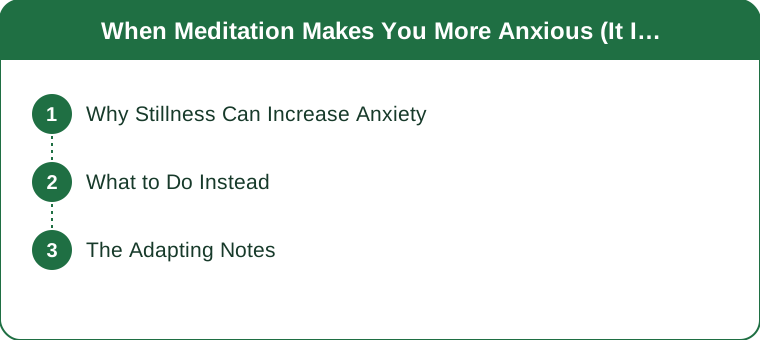
Why Does Sitting Still Make Anxiety Worse?
Stillness removes the distraction. The anxiety was already there — noise, movement and tasks were covering it. Take those away and you haven’t created anything; you’ve just stopped drowning it out. That’s why it seems to appear the moment you sit down.
Attention turned inward amplifies sensations. Body-scan style attention makes ordinary physical sensations louder. A tight chest you’d normally not register becomes the main event once you’re looking for it.
Noticing your heartbeat feeds the loop. This is the classic one. You notice your heart, noticing it makes it faster, the speed confirms something’s wrong, and around it goes. Perfect little feedback loop, entirely self-sustaining.
Breath focus can backfire. Watching your breath makes breathing self-conscious, and self-conscious breathing feels wrong — shallow, or effortful, or like you can’t get a full one. For anxious breathers, the most standard instruction in meditation is often the worst possible starting point.
And it’s common, not a personal failing. This is a known response with a known mechanism, not evidence you’re bad at meditating or too tense to be helped.

What Should You Do Instead?
Every option here keeps attention out rather than in.
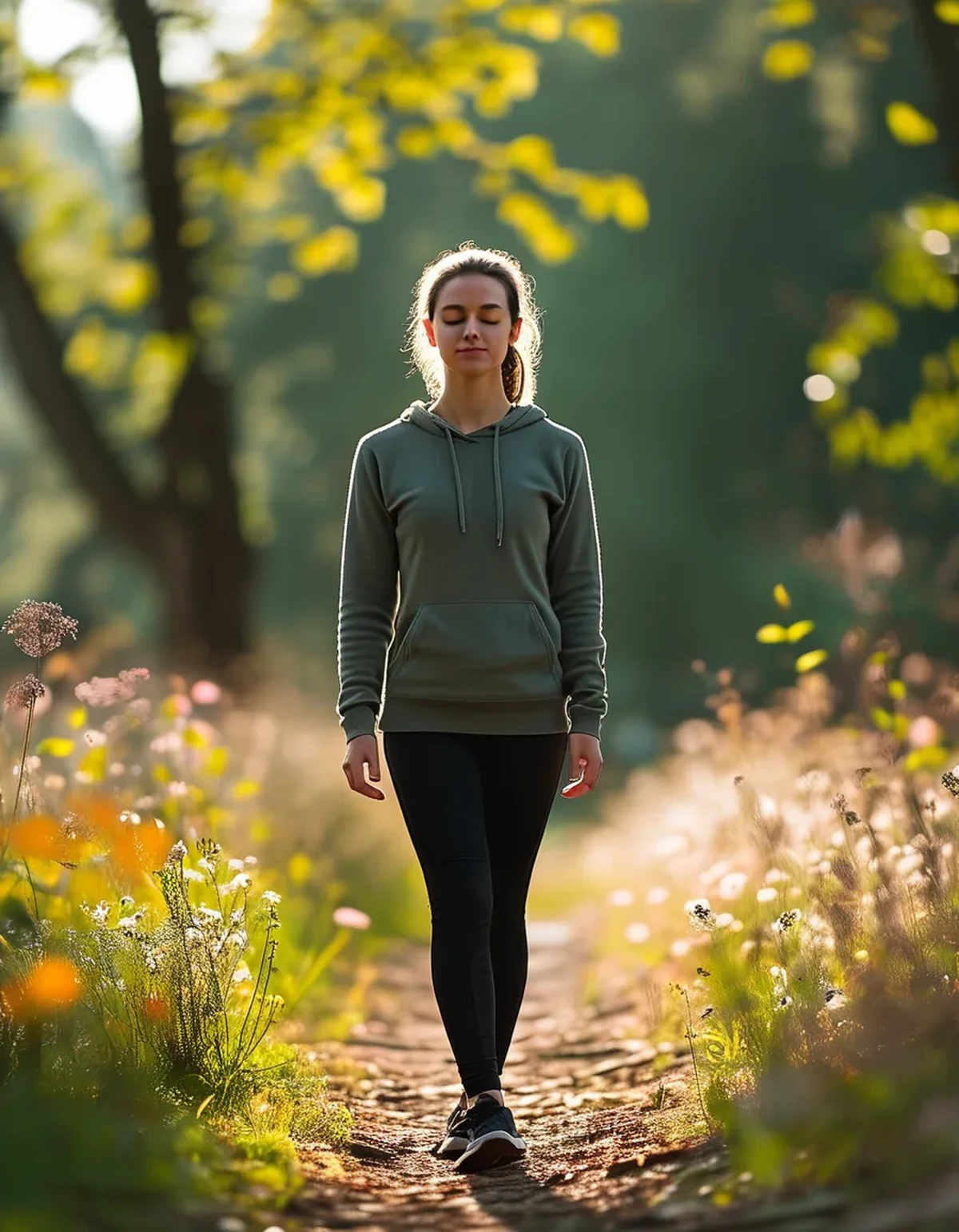
Walking meditation. The body has a job, so attention has somewhere to go that isn’t your heartbeat. Often the single best swap for anxious meditators, and it doubles as a walk.
Open eyes, soft gaze. Let your eyes rest unfocused on a spot a few feet ahead. You keep the visual channel open, which stops the inward spiral before it starts. Nobody made a rule about closed eyes.
Grounding through the senses. The five-senses exercise — five things you can see, four you can hear, three you can touch, and so on. It’s outward-facing by design and it works in the middle of a supermarket.
Mindful movement or gentle yoga. Same attention training, moving body. For a lot of people this is the version that actually sticks.
Guided rather than silent. A voice gives the mind something external to follow. Silence is advanced mode, and starting there is an odd default for beginners.
External focus on sound. Traffic, birds, a fan, rain. Anything outside your body. You’re practising attention — you’re just not pointing it at your ribcage.
Loving-kindness instead of a body scan. Directing well-wishes toward people is cognitive and relational rather than sensory, which suits anxious minds far better than tracking sensations.
Shorter sessions. Two minutes done calmly beats twenty spent white-knuckling. Twenty minutes is a convention, not a threshold.
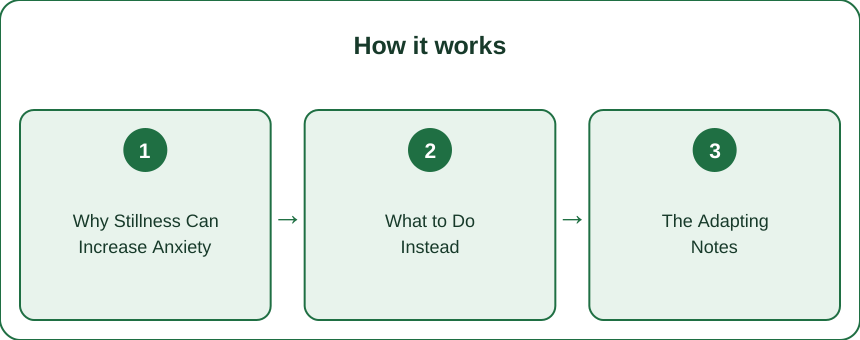
How Do You Adapt the Practice?
Start far shorter than the guidance says. Two minutes. Genuinely. Build from something that works rather than shrinking from something that doesn’t.
You’re allowed to stop. Stopping when a practice is making you feel worse is a sensible response to information, not a failure of discipline. Nobody gets a medal for finishing a session that made things worse.
Don’t force the breath. If breath focus triggers you, drop it entirely. Let it do whatever it does and put your attention somewhere else. This one instruction resolves the problem for a lot of people.
Move first, then sit. A ten-minute walk before you sit changes the whole experience — it burns off physical restlessness so stillness isn’t fighting an activated body.
Treat format as adjustable. Eyes, position, length, guided or silent, sitting or moving — all dials, none of them rules. The version that works for you is the correct version.
Small and consistent beats ambitious. Two minutes daily builds something. Twenty minutes twice, followed by three weeks of avoidance, builds nothing except a sense of failure.
Get support for persistent anxiety. If anxiety is affecting your daily life, meditation is a supplement, not a treatment plan.
Myth vs Fact
Myth: If meditation makes you anxious, you need to push through it. Fact: For anxious responders, pushing through usually strengthens the association. Switching format works better.
Myth: Real meditation means eyes closed, sitting still, in silence. Fact: Walking meditation is centuries old. Open-eyed practice is standard in several traditions. The strict version is a convention, not a requirement.
Myth: Focusing on your breath always calms you down. Fact: For people prone to anxious breathing, breath focus is one of the most reliable triggers there is.
Myth: Twenty minutes is the minimum for any benefit. Fact: Short, consistent practice is more useful than long sessions you dread and then skip.
Frequently Asked Questions
Is it normal to feel worse after meditating?
It’s common enough to have a name and a mechanism. Stillness removes distraction and points attention at internal sensations — if those were the problem, the practice amplifies them. It’s a signal to change the format, not to try harder.
What’s the best meditation for anxiety?
Usually something with an external anchor: walking meditation, guided audio, or sound-based focus. Body scans and unguided breath focus are the two most likely to backfire, which is unfortunate given they’re the two most commonly recommended.
How long before it gets easier?
With a format that suits you, most people notice it stops feeling like a fight within a couple of weeks of short daily practice. If it’s still consistently unpleasant after a month of a well-adapted approach, that’s worth talking to someone about rather than continuing alone.
Should I meditate before or after exercise?
After, if stillness makes you anxious. Physical activity discharges some of the restlessness that makes sitting difficult, so a walk or a gentle session first genuinely changes what the sitting feels like — one reason mindful movement suits anxious meditators so well.
When to Speak to a Professional
If anxiety is interfering with your sleep, work or relationships, or if meditation reliably brings up distressing memories or a sense of detachment, talk to a doctor or therapist. Meditation can be a genuinely useful part of managing anxiety, but it isn’t a substitute for treatment — and for some people, particularly with a trauma history, certain practices need adapting with professional guidance. This article is general information, not medical advice.
TL;DR:
- Stillness doesn’t create anxiety — it removes the distractions that were masking it and turns attention toward the sensations.
- Noticing your heartbeat and watching your breath are the two most reliable triggers, and both are standard instructions.
- Swap to walking meditation, open eyes with a soft gaze, guided audio, sense-grounding, or external sound focus.
- Start at two minutes, not twenty, and move before you sit.
- Stopping when a practice makes you feel worse is sensible, not a discipline failure.
- Persistent anxiety warrants professional support — meditation is a supplement, not a treatment.
Keep Reading
This article is for general informational and styling purposes only. Fit, sizing, and product availability may vary.