How Mindful Movement Complements Your Workout

Quick Answer: Mindful movement means moving slowly with full attention on your body and breath — gentle yoga, mobility work, tai-chi-style flow. Added as a 10-minute cooldown or a 20-minute rest-day session, it supports recovery, improves mobility and sharpens body awareness that carries directly into harder training. It’s a layer, not a replacement.
We tend to split fitness into two categories: “real workouts” — hard, sweaty, results-driven — and “the gentle stuff,” which is stretching, yoga and breathing, and which quietly gets filed under nice if you have time.
Nobody has time. So it never happens.
But mindful movement isn’t the soft consolation prize. It’s the layer that makes everything else work better, and it’s the first thing to disappear from a program right when it would help most.
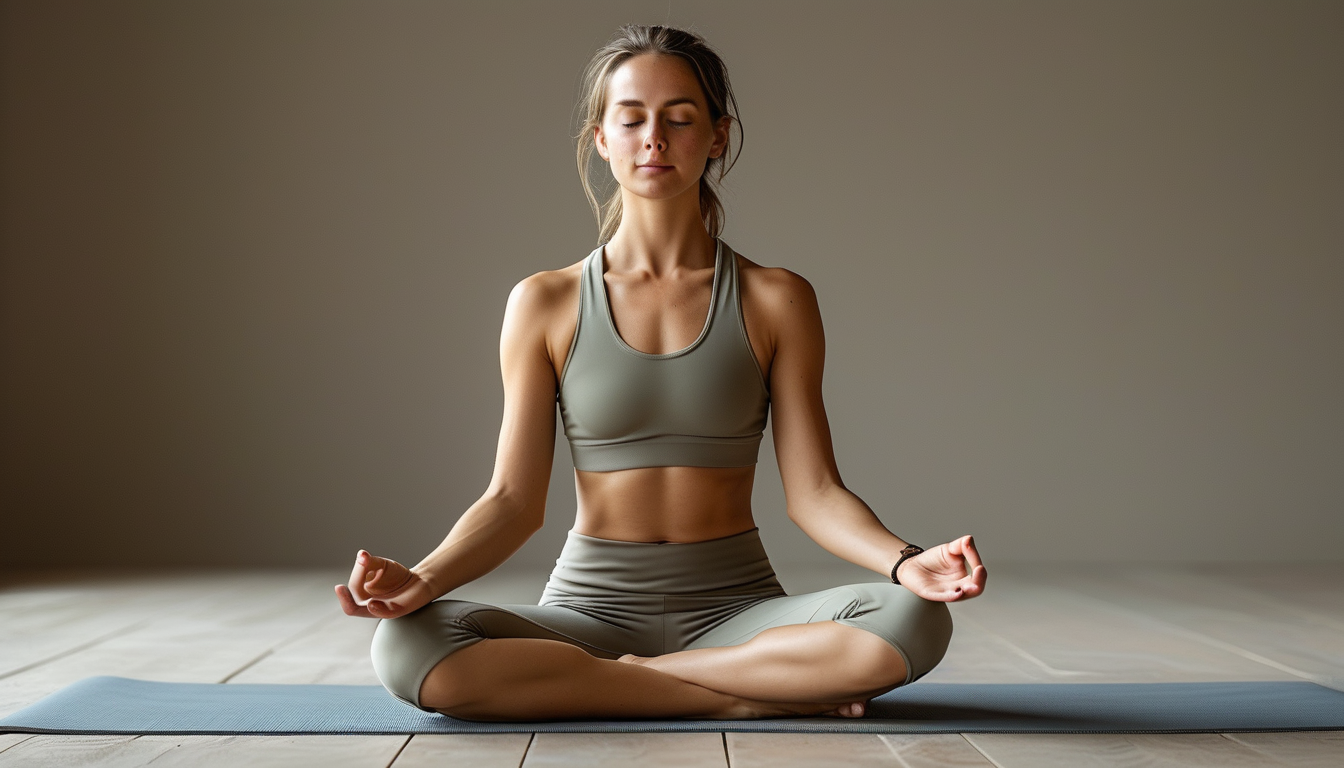
What Does “Mindful Movement” Actually Mean?
It means moving with full attention on your body and breath — feeling each stretch, noticing each sensation — rather than zoning out, rushing, or mentally drafting emails while your hamstrings wait.
Think slow yoga, deliberate mobility work, tai-chi-style flow, or simply stretching with your phone in another room.
The point isn’t intensity. It’s presence. The same shapes done while scrolling are just stretching; done with attention, they’re something different — and the difference is measurable in how much you actually notice about your own body afterward.
That last part is the real product. Most of the benefits below flow from attention, not from the movements themselves.
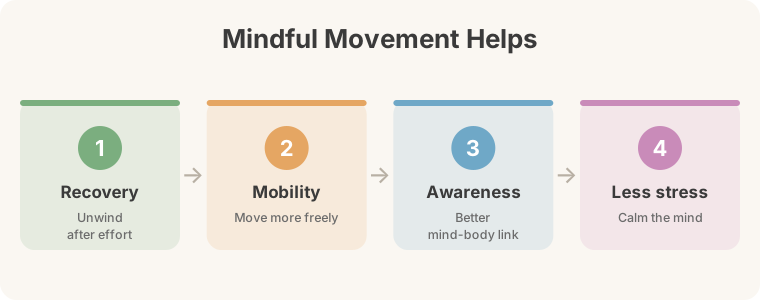
How Does It Actually Help Your Hard Training?
1. It supports recovery
After intense work, slow deliberate movement and deep breathing act as a counterbalance to high-intensity effort. Extended exhales in particular nudge your nervous system out of the elevated state a hard session leaves you in — which is genuinely useful if you train in the evening and then lie awake wondering why you’re wired.
2. It improves mobility
Slow, attentive stretching helps you move more freely, and mobility is often the quiet limiter on harder work. A squat that’s restricted by ankles, or a press restricted by thoracic spine, doesn’t get fixed by adding load — it gets fixed here.
3. It sharpens body awareness
Paying attention while you move builds a better internal map. You start noticing your form, your habitual tension patterns, which side is tighter, and where you’re compensating. That awareness transfers straight into your harder sessions, and it’s the reason people who do mobility work tend to catch their own technique errors sooner.
4. It lowers stress
The breath-focused, present quality of mindful movement is genuinely calming, and unlike most stress interventions it doesn’t require sitting still — which some people find much easier to sustain than seated meditation.
5. It keeps you consistent
The least glamorous benefit and possibly the biggest. Mindful movement gives you something to do on days you’re too tired, too sore or too flat to train hard. That’s the difference between a week with three sessions and a week with five, and consistency beats intensity over any timeframe that matters.
Myth vs Fact
Myth: Stretching before a workout prevents injury. Fact: Long static stretching before training doesn’t reliably prevent injury, and can slightly reduce power output right afterward. Save the slow work for after your session or for separate days; warm up with dynamic movement instead.
Myth: Mindful movement is only for people who can’t train hard. Fact: It’s most useful for people who do train hard, because they generate the most tension, the most fatigue and the most need for recovery. The easier your training is, the less you need this.
Myth: It’s an easy workout. Fact: It’s not a workout at all in the training-stimulus sense, and it doesn’t need to be. Judging it by how sweaty you got is applying the wrong measuring instrument entirely.
Myth: You need 45 minutes and a studio. Fact: Ten minutes at the end of a session or on the floor before bed captures most of the practical benefit. Studio classes are lovely; they’re not the requirement.
How Do You Actually Fit It Into a Week?
You don’t need much, and the barrier should be low enough that a bad day doesn’t clear it.
- 10 minutes as a cooldown after tough sessions — the highest-value slot, and the easiest to build a habit around because you’re already there.
- A 20-minute flow on rest days to stay loose and de-stress.
- 5 minutes in the morning for a grounded start, especially if you sit at a desk afterward.
- Slow, attentive stretching whenever you feel tight, without needing it to be a whole session.
- Before bed, if your evenings run wired. This is the one people are most surprised by.
Practical note: the sessions that actually get done are the ones with no friction attached. If you have to change clothes to do ten minutes of floor work, you won’t. Something comfortable enough to sit and fold in — a soft pair of high waist leggings you’d wear around the house anyway — removes that step entirely, which sounds trivial and turns out to be most of the battle.

Balance Is the Point
The best routines mix effort and ease — hard days that build capacity, mindful days that restore it. Neither works alone for long. All effort and you accumulate fatigue faster than you adapt to it; all ease and there’s nothing to recover from.
Mindful movement isn’t a step down from “real” exercise. It’s the recovery and awareness layer that makes harder training more effective and, more importantly, more sustainable over years rather than months.
A note on scope, and when to see a professional: mindful movement supports general wellbeing and mobility — it isn’t treatment for an injury or a medical condition. See a physical therapist for persistent pain, a joint that catches or gives way, numbness or tingling, or any restriction that isn’t improving; stretching into a genuine problem tends to make it more patient, not better. And if low mood, anxiety or stress is significantly affecting your daily life, that deserves proper support rather than a movement practice alone.
FAQ
Is mindful movement the same as yoga?
Yoga is one form of it, but not the only one. Slow mobility work, tai chi, qigong, gentle Pilates and simply stretching with full attention all qualify. What defines it is the attention and the pace, not the tradition or the shapes.
How long should a mindful movement session be?
Ten minutes captures most of the practical benefit as a cooldown, and 20-30 minutes works well as a standalone rest-day session. Consistency matters far more than duration here — five minutes most days beats an hour once a fortnight.
Can mindful movement replace stretching or strength training?
It overlaps heavily with stretching and mobility work, so it can absolutely fill that role. It can’t replace strength training — building muscle and strength requires progressive loading, which this isn’t. Think of it as the complement to hard training, not the substitute.
TL;DR
- Mindful movement = slow movement with full attention on body and breath. The attention is the active ingredient.
- It supports recovery, mobility, body awareness, stress and — quietly — consistency.
- 10 minutes as a cooldown is the highest-value, easiest-to-sustain slot.
- Skip long static stretching before training; do it after or on separate days.
- It complements hard training, it doesn’t replace it. Strength still needs load.
- Persistent pain, numbness or a joint that gives way means see a professional, not stretch harder.
This article is for general wellness and informational purposes only and isn’t a substitute for professional medical advice.
Keep Reading
This article is for general informational and styling purposes only. Fit, sizing, and product availability may vary.