Why Your Mind Races the Moment You Sit Down to Meditate

Quick Answer: A racing mind when you sit down to meditate is normal. Stillness doesn’t create thoughts, it simply makes them easier to see. Meditation works by noticing the thought, labeling it lightly, and returning to your breath or chosen focus. Over time, that return gets quicker and calmer.
You sat down with good intentions, closed your eyes, and within ten seconds you were planning dinner, rehearsing a conversation, and wondering whether you forgot to lock the door. Most people have this exact experience. It doesn’t mean you’re bad at meditation. It means your brain is doing what brains do.

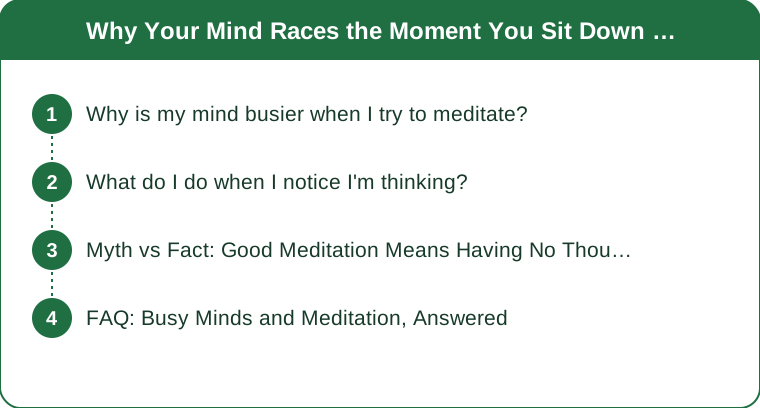
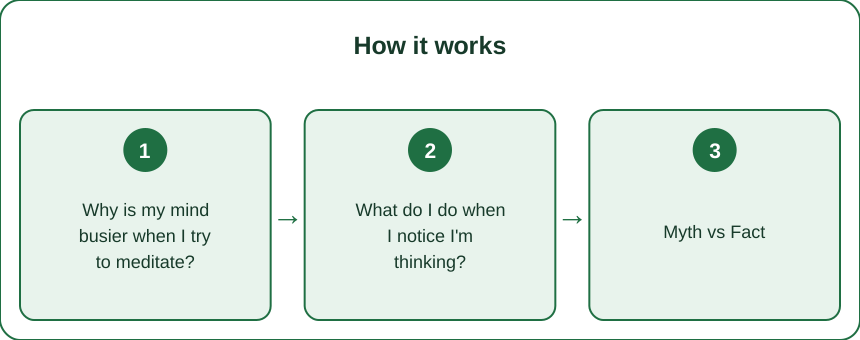
Why is my mind busier when I try to meditate?
When you stop moving, the usual background noise of the day becomes more obvious. Thoughts that were always there now get your attention, and it can feel like there are more of them. In reality, you’re just noticing more.
The first few minutes of meditation often feel the busiest. That’s when your body is settling, and your mind is still running at its usual pace. Many people find that the racing eases after a few sessions, as the practice starts to feel familiar rather than strange.
What do I do when I notice I’m thinking?
Use a simple three-step loop:
- Notice: Say to yourself, “Thinking,” with no judgment.
- Label: Name the type of thought, such as “planning” or “worrying.”
- Return: Gently bring your attention back to your breath, the feeling of your feet on the floor, or a sound in the room.
Repeat as many times as you need. Each return counts as practice. You’re training the skill of coming back, which carries over into real life when you catch yourself spiraling during a hard conversation.

Myth vs Fact: Good Meditation Means Having No Thoughts
Myth: If your mind is still busy, you’re failing at meditation.
Fact: The goal is not an empty mind. The goal is to notice when attention drifts and come back without criticizing yourself. A session with fifty returns is not worse than a session with five. It may be doing more work.
Try measuring your practice by how quickly you come back, not by how quiet your mind feels. That shift alone makes many beginners more relaxed about sitting down.
FAQ: Busy Minds and Meditation, Answered
How long should a beginner practice?
Start with three to five minutes a day. A short, steady habit is far more useful than a long session you dread. Add a minute or two when it starts to feel easy.
Should I use an app or guided audio?
Guided audio can help you stay on track, especially in the first few weeks. Choose one with a short length and a clear voice, and try a few before you commit.
Is it normal to feel more anxious at first?
Some people notice more tension or restlessness in the first few sessions because they are paying attention to feelings they usually ignore. If it stays intense or distressing, talk to a mental health professional and consider changing the practice.
This is general information, not medical advice.
TL;DR:
- A busy mind when you sit down is normal, and it doesn’t mean you’re failing.
- Use the notice, label, and return loop each time your attention drifts.
- Measure your practice by how quickly you come back, not by how quiet you feel.
- Start with three to five minutes a day, and add time once it feels easy.
Meditation is a skill built through many small returns, so keep sitting down even on the messy days.
Keep Reading
This article is for general informational and styling purposes only. Fit, sizing, and product availability may vary.