The Counterintuitive Anxiety Trick: Scheduling Time to Worry on Purpose

Quick Answer: Pick a consistent 15–20 minute slot each day — not right before bed — and worry on purpose during it. When a worry shows up outside that window, jot it in a notebook and postpone it. Your brain learns that worry has a reliable outlet later, which reduces the urgency to process it the moment it arrives. End the session on time even if nothing feels resolved.
“Just stop worrying about it” is advice that has never worked for anyone, ever.
There’s a reason for that, and it’s not willpower. Pushing an anxious thought away tends to bring it back louder — so the technique that actually works does the opposite of what you’d expect: it gives the worry an appointment.

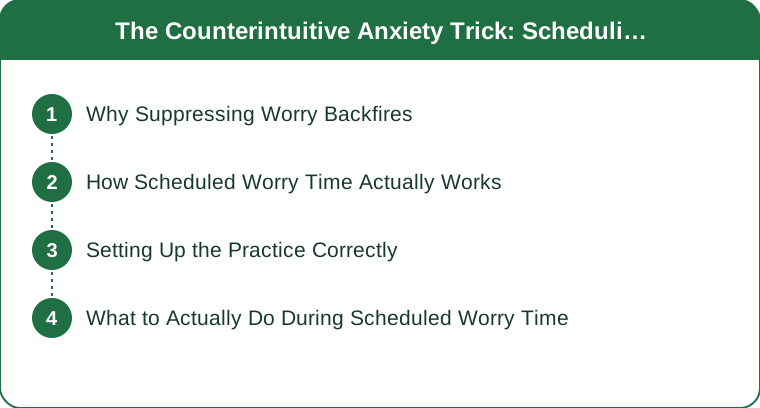
Why Does Suppressing Worry Backfire?
The rebound effect. Deliberately pushing an anxious thought away often makes it return more frequently and more intensely shortly afterwards. This is a well-documented pattern, not a personal failing — trying not to think about something requires monitoring whether you’re thinking about it, which is itself thinking about it.
Worry wants acknowledgement, not elimination. Anxious thoughts often persist precisely because they haven’t been properly acknowledged or processed. If that’s true, then “get rid of it” was the wrong target from the beginning — you’re fighting a thought that’s trying to be heard.
Uncontained worry fragments your whole day. Left unmanaged, worry doesn’t arrive once and get dealt with. It shows up in a dozen small, low-grade intrusions across sixteen hours — never long enough to resolve anything, always long enough to interrupt. You end up doing the worrying anyway, just badly and in pieces.
How Does Scheduled Worry Time Work?
A designated time and place. A specific, consistent slot each day — usually 15–20 minutes — dedicated entirely to worrying on purpose. Nothing else happens in that window.
Postponing during the day. When a worry surfaces outside the window, note it briefly and consciously defer it. You’re not dismissing it. You’re saying “not now, at 6pm,” which is a promise rather than a refusal — and that distinction is why it works where suppression doesn’t.
Your brain learns worry has a container. With repetition, your mind starts to trust that there’s a reliable outlet coming. The felt urgency to process a thought the instant it appears drops, because the thought has somewhere to go.

How Do You Set It Up Properly?
Same time every day. Consistency is what teaches your brain the outlet is real. An inconsistent worry window doesn’t earn the trust the technique depends on.
Not right before bed. This is the setup mistake people make most. Worrying close to sleep makes falling asleep harder, which is the exact problem you were trying to solve. Early evening works well — late afternoon or after dinner, with a few hours before bed.
Keep a physical notebook. A small paper notebook for postponed worries. Writing a thought down does something a mental note doesn’t — it files it externally, so you’re not holding it. Paper seems to beat a phone here, largely because the phone offers a dozen other things to do instead.
End deliberately, on time. Stop at the limit even if things feel unresolved. This is uncomfortable at first and it’s central to how the technique works — the boundary is the intervention. A worry session that runs until you feel better isn’t a container; it’s just worrying.
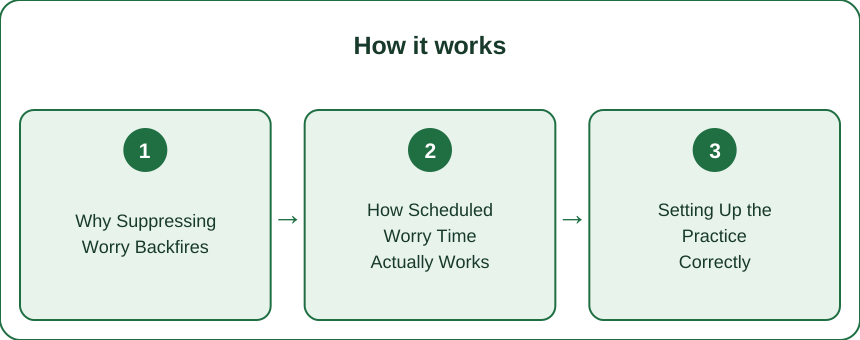
What Do You Actually Do During the Session?
Review the postponed list. Go through what you noted since last time and give each item genuine, focused attention. Don’t skim. You promised these thoughts a hearing — this is the hearing.
An interesting thing happens here: a good proportion of what felt urgent at 11am reads as fairly minor by 6pm. That’s information, and it’s some of the most useful feedback the technique produces.
Sort actionable from unactionable. Two piles. Worries with a concrete next action available now — book the appointment, send the email, check the balance — get that action written down. Worries that are simply uncertainty about the future get named as uncertainty, because there’s nothing to do with them except acknowledge them. Treating those two categories the same way is why unstructured worrying goes in circles.
Close with a ritual. Something small and consistent: shut the notebook, put it in a drawer, stand up. It signals to your brain that the window is genuinely done for the day. It sounds silly and it does real work — the ritual is what makes the boundary a boundary.
Myth vs Fact
Myth: Scheduling worry means you’ll worry more. Fact: Contained worry takes 20 focused minutes. Uncontained worry takes fragments of your whole day and resolves less.
Myth: If you can’t solve a worry, the session failed. Fact: Sorting worries into actionable and merely uncertain is the outcome. Not everything has a solution, and naming that is progress.
Myth: You should keep going until you feel calm. Fact: The time boundary is the active ingredient. Running over turns a container back into ordinary worrying.
Myth: It works immediately. Fact: Give it two to three weeks. The postponing step only works once your brain has evidence the window is reliable.
Frequently Asked Questions
How long should worry time be?
Fifteen to twenty minutes is the usual recommendation, and long enough for most people. Shorter feels rushed; much longer tends to drift into rumination rather than structured processing.
What if the worry won’t wait until my scheduled time?
Write it down — the writing itself often takes enough pressure off — and remind yourself it has an appointment. If something is genuinely urgent and actionable now, act on it; the technique is for worry, not for actual emergencies.
How long until it starts working?
Most people notice a difference after two to three weeks of consistent daily practice. It takes that long because the postponing step depends on your brain having accumulated evidence that the window actually happens.
What if worry time makes me feel worse?
Some initial discomfort is normal — you’re deliberately approaching thoughts you’ve been avoiding. But if sessions consistently leave you distressed, or if you can’t stop at the time limit, that’s a signal to work with a therapist rather than to keep pushing alone.
When to Speak to a Professional
If anxiety is affecting your sleep, work or relationships, or if worry feels genuinely uncontrollable, talk to a doctor or therapist. Scheduled worry time is a technique drawn from cognitive behavioural therapy and it works best as part of proper treatment for anything more than everyday worry. Panic attacks, intrusive distressing thoughts, or anxiety that’s getting worse all warrant professional support. This article is general information, not medical advice.
TL;DR:
- Suppressing worry backfires — pushed-away thoughts return more often and more intensely.
- Uncontained worry fragments your whole day instead of being dealt with once.
- Set a consistent 15–20 minute daily window, not close to bedtime.
- Outside the window, note worries in a paper notebook and postpone them — a promise, not a refusal.
- In the session: review the list, sort actionable from merely uncertain, and close with a small ritual.
- End on time even if things feel unresolved — the boundary is the active ingredient. Give it 2–3 weeks.
Keep Reading
This article is for general informational and styling purposes only. Fit, sizing, and product availability may vary.