Why Your Shoulders Creep Up When You Feel Anxious (and How to Lower Them)

Quick Answer: When you feel anxious, the body prepares for effort and the shoulders often rise toward the ears. This is a natural alarm response. You can interrupt it with a slow exhale, a deliberate shoulder drop, and a longer out-breath than in-breath. If anxiety is frequent, intense, or affects your daily life, talk with a doctor or therapist.
You are sitting at your desk, reading an email you do not want to read, and you notice your neck is tight and your shoulders are almost touching your ears. You did not decide to tense up. The body did it on its own, and the same thing happens when a worry starts to replay.

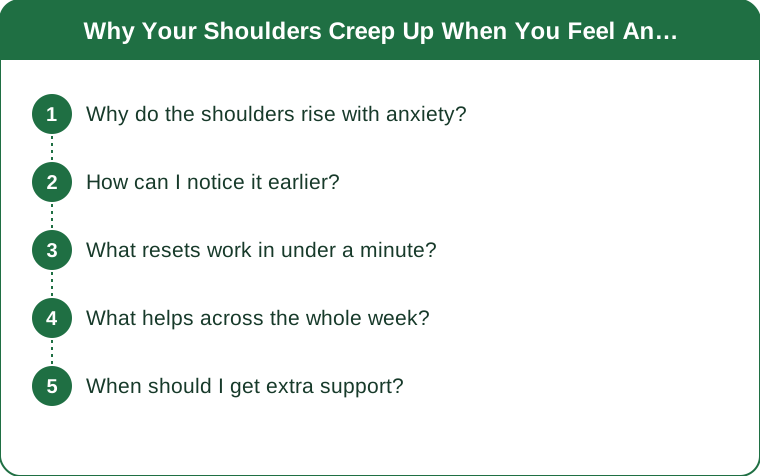
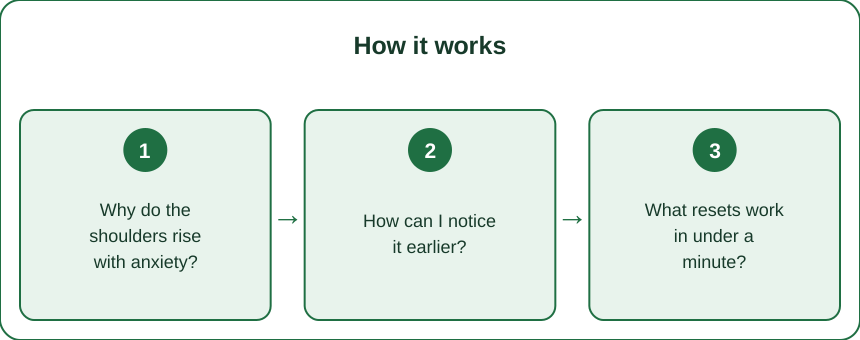
Why do the shoulders rise with anxiety?
The body’s stress response prepares you to act. Muscles around the neck and upper back tighten, and the breath becomes shallow and high in the chest. The shoulders lift as part of that preparation.
This response is useful when you need to react fast. It is less useful when the stress is an email or a long to-do list, and the muscles stay braced long after the threat has passed.
How can I notice it earlier?
Use a quick body check a few times a day. Ask yourself three questions: Where is my jaw? Where are my shoulders? How is my breath? If you notice tension, you have already found the moment to reset.
Many people find that a regular check, tied to a habit like sitting down or opening a laptop, builds awareness faster than trying to relax all at once.

What resets work in under a minute?
Try a slow exhale. Breathe in through the nose for 4 counts, then breathe out for 6 to 8 counts. Let the shoulders drop on each exhale. Repeat 5 times.
Pair it with a shoulder roll. Lift the shoulders, hold for 3 seconds, then let them drop completely. Do 3 rounds. The drop should feel like a release, not a forced push.
What helps across the whole week?
Daily movement helps. A 10-minute walk, gentle neck and chest stretches, and a few minutes of slow stretching before bed can lower baseline tension. Keep the screen at eye level and the chair supportive, so your shoulders do not carry the load all day.
Sleep and caffeine also affect how tense the body feels. Small changes there can make the shoulder resets more effective.
When should I get extra support?
If anxiety shows up most days, disrupts sleep or work, or comes with chest pain, shortness of breath, or thoughts of harming yourself, get help right away. A doctor or therapist can offer proven options, including therapy and medication when needed.
This is general information, not medical advice. Your body’s signals are worth taking seriously, and you do not have to manage them alone.
TL;DR:
- Rising shoulders are a normal part of the body’s stress response.
- Notice the signs early by checking your jaw, shoulders, and breath a few times a day.
- Use a slow exhale and a deliberate shoulder drop to reset in under a minute.
- Daily walks, gentle stretches, and an ergonomic setup lower baseline tension.
- Frequent or intense anxiety deserves support from a doctor or therapist.
Your shoulders are not failing you. They are reacting to stress, and they can learn to let go.
Keep Reading
This article is for general informational and styling purposes only. Fit, sizing, and product availability may vary.