Why Holding a Stretch Longer Doesn't Loosen Your Hamstrings

Quick Answer: Holding a hamstring stretch longer doesn’t always loosen it because the feeling of tightness is largely your nervous system guarding the range, not a fixed length of muscle. Gentle, repeated stretching with relaxed breathing, plus strength through the full range, usually makes more difference than a single long hold. Try two to three short sets of 30 to 45 seconds, breathing slowly, and stop at mild tension rather than sharp pain. If the tightness comes with numbness, pain at rest or a recent injury, see a clinician.
You sit on the floor and reach for your toes. Two minutes pass. You’re breathing hard and your hamstrings still feel like piano wire. You try again tomorrow and get the same result.
That experience is so common that many people assume their hamstrings are simply short. Often there’s a more useful explanation.

Why do hamstrings feel tight even after a long hold?
Your muscles are wrapped in sensory receptors that report length and tension to the brain. When you stretch, those receptors can signal the brain to tighten the muscle as a protective response, especially if the stretch feels intense or unfamiliar.
This is why a long, forceful hold can leave you feeling as stiff as before. The muscle isn’t necessarily shorter. The nervous system is guarding the range, and it changes its signal with every breath, every time you push, and every time you feel a stretch sensation.
Research suggests that the feeling of tightness is strongly influenced by how safe and relaxed you feel in the position. Stretching gently, with slow breathing and a comfortable intensity, often lets the range open more over time.
Think of it like a door that sticks. Yanking on it once rarely frees it. Pushing gently, again and again, while the hinge gets used to moving, usually works better. Your hamstrings respond the same way. A few short sessions teach the nervous system that the end range is safe, and then the same position feels easier without any extra force.
Myth vs Fact: The more it hurts, the more it helps
Myth: a stretch that’s painful or intense is the one that loosens the muscle.
Fact: mild tension is enough. Sharp pain or a burning feeling tells your nervous system to guard the area, which slows progress. Aim for a stretch you can breathe through, around a 4 out of 10 on a comfort scale.
How do you stretch hamstrings so they actually feel looser?
Use short, repeated sets with breath and strength work.
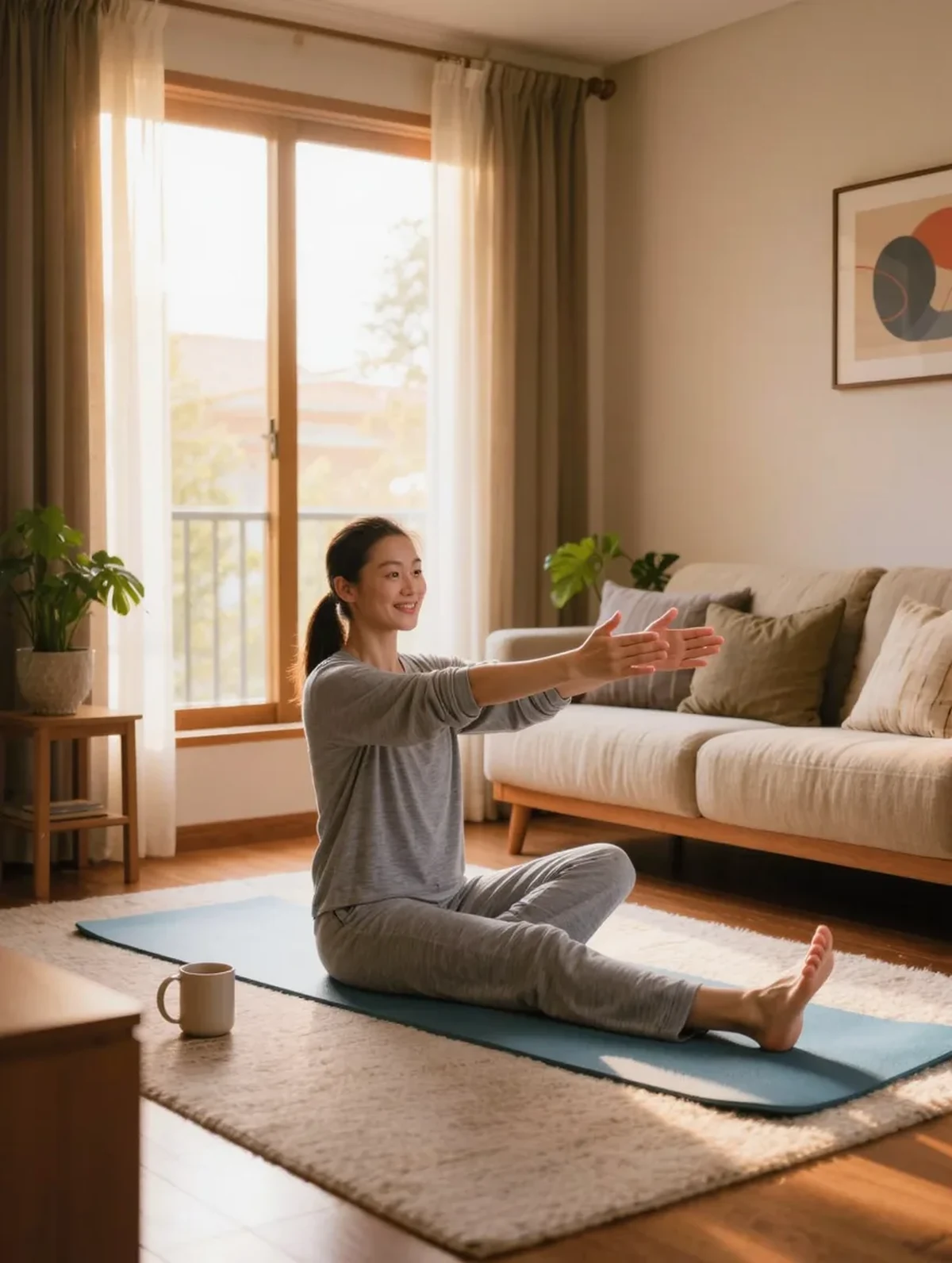
- Seated hinge, gentle: sit with legs straight, hinge from the hips, hold for 30 seconds, breathe out slowly, 2 to 3 sets.
- Standing hamstring stretch with a chair: rest one heel on a chair, keep the back flat, hinge forward to mild tension, 30 seconds each side.
- Glute bridge: lie on your back, press through your heels, lift hips, hold 3 seconds, 10 reps. This trains the hamstrings to work under load.
- Single-leg Romanian deadlift with a light weight: strength through the full range helps the muscle feel comfortable at length.
Do these 4 to 5 times a week. Most people notice their forward reach feels easier within two to three weeks.
What Nobody Tells You About Breathing in a Stretch
Holding your breath is one of the fastest ways to make a stretch feel worse. Breath affects the nervous system, and a long, slow exhale tends to help the body relax into a position.
Try this: inhale through your nose for four counts, then exhale slowly for six. On each exhale, let the position deepen by a fraction of an inch. You’ll often find the stretch feels more open without any extra pushing.
FAQ: Hamstring Stretching, Answered
Are tight hamstrings a sign of a problem?
Tight hamstrings are very common and usually come from long sitting, low activity, or a strength imbalance. They don’t mean something is wrong unless they come with pain, numbness, or weakness.
How long should I hold a stretch?
Around 30 to 45 seconds, repeated two or three times, is a practical range for most people. Holding longer rarely adds much on its own.
When should I see a professional?
See a doctor or physical therapist if you have sharp pain, numbness or tingling down the leg, pain at rest, or a recent injury. Those signs need an assessment before you keep stretching.
This is general information, not medical advice.
TL;DR:
- A long hold doesn’t always loosen hamstrings because the nervous system often guards the range when a stretch feels intense.
- Aim for mild tension you can breathe through, not sharp pain.
- Use short, repeated sets, add glute bridges and single-leg deadlifts for strength, and stretch 4 to 5 times a week.
- Breathe out slowly to let the position open, and get checked if you notice numbness, tingling or pain at rest.
Looser hamstrings come from patience, breath and strength more than from brute force. Give your body a few gentle weeks, and let the forward reach follow. This is general information, not medical advice.
Keep Reading
This article is for general informational and styling purposes only. Fit, sizing, and product availability may vary.