Why Guided Meditations Stop Working After a Few Weeks

Quick Answer: Guided meditation stops landing because of habituation - your brain learns the voice, the pacing, and the script, and stops treating any of it as new information. The novelty that made week one feel profound is gone by week four. The fix is not a new app. It is deliberately reducing guidance: shorter sessions, longer silences, then unguided practice with just a timer.
This is the point where most people conclude meditation is not for them. It is actually the point where the training wheels are ready to come off.

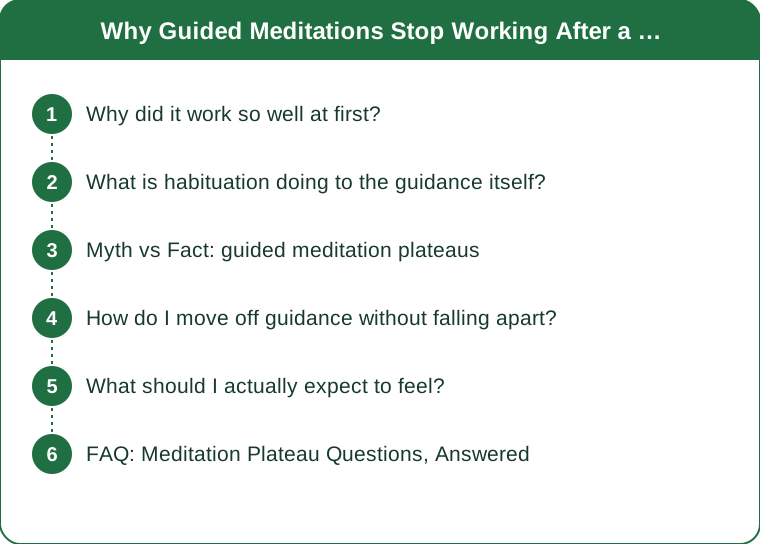
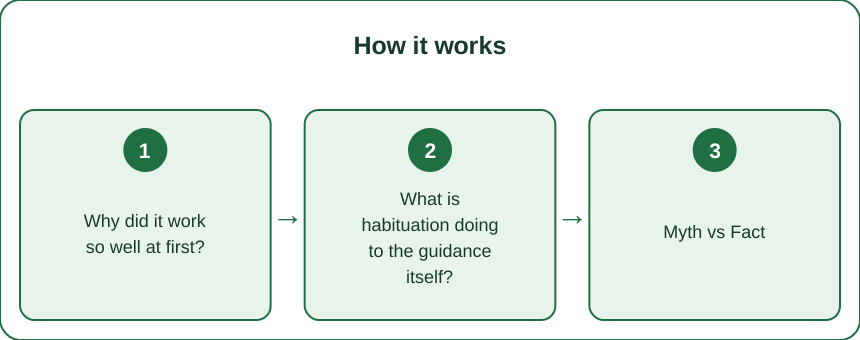
Why did it work so well at first?
Two things were happening in week one that are not happening now.
The first is novelty. A new voice, a new instruction set, a new bodily experience - your brain allocates attention generously to anything unfamiliar. That attention itself is a large part of what makes early sessions feel vivid.
The second is contrast. If you had never sat still and breathed deliberately, the first few times produce a genuinely noticeable shift from your baseline. Once sitting quietly becomes a normal part of your week, the contrast shrinks. The effect did not disappear - the gap between it and your everyday state did.
That second point matters because it means the practice may still be working. It is just no longer producing a dramatic before-and-after, which is what people are actually measuring when they say it stopped working.
What is habituation doing to the guidance itself?
Once you have heard a script four or five times, your brain begins predicting it. The instruction to notice your breath arrives before the voice says it. The pause lands where you expected. Prediction is efficient, and efficiency is the enemy of attention.
This is why the same 10-minute body scan that felt absorbing in week two feels like a podcast in week six. You are no longer listening - you are anticipating.
Some apps counter this by rotating scripts, which helps for a while and then produces a different problem: you become dependent on novelty as the engine, and each new teacher works for a shorter stretch than the last. The teacher is not the variable that needs changing.
Myth vs Fact: guided meditation plateaus
Myth: If it stopped working, you were doing it wrong. Fact: Habituation is a normal neurological process. It happens to experienced practitioners too - it is why traditional training moves people off instruction quickly.
Myth: You need a better app or a more advanced course. Fact: More instruction usually deepens the dependence. Less instruction is the standard next step.
Myth: Meditation should feel calming every time. Fact: After the novelty period, most sessions feel unremarkable. Research on meditation outcomes tends to show benefits accumulating across weeks, not within any single session you can feel.
Myth: A boring session is a wasted session. Fact: Noticing boredom and staying anyway is, quite literally, the skill being trained.

How do I move off guidance without falling apart?
Do it in four steps over about four weeks. Rushing straight to silence is why people bounce back to the app.
- Week one - shorten. Take your usual guided session and cut it in half. A 5-minute version of something you know well has less script to predict.
- Week two - find a sparse track. Most apps have sessions with long silent gaps, often labeled as unguided with bells or timed practice. Use those.
- Week three - front-load only. Listen to 60 seconds of instruction to settle, then pause the audio and continue in silence with a timer for the rest.
- Week four - timer only. Set 8 minutes. Pick one anchor - breath at the nostrils, or the feeling of your hands. When you notice you have drifted, return. That is the whole practice.
The drop-off point is usually week three. Expect it to feel worse before it feels better, because you have removed the thing that was doing the attentional work for you.
What should I actually expect to feel?
Less than you did in week one, and that is the correct outcome.
A useful reframe: stop rating sessions and start rating days. Did you notice irritation before you acted on it? Did you catch yourself doom-scrolling 4 minutes in rather than 40? Did you fall asleep faster? Those are the measurable outputs, and they lag the practice by weeks.
A simple tracking method that works: one line in a notebook after each session, but write about the day rather than the sit. Ten seconds of writing, no rating scale, no app. Read the whole page back after a month. Most people find the trend they could not see day to day.
And if you genuinely have no interest in sitting anymore, walking practice is not a compromise. Twelve minutes of walking with attention on the soles of your feet trains the same return-when-you-drift mechanic with far lower boredom risk.
FAQ: Meditation Plateau Questions, Answered
Should I switch to a different app?
Probably not. Switching resets novelty for a few weeks and then lands you in the same place with a new subscription. Reducing guidance addresses the actual cause.
How long until unguided practice feels natural?
Most people report it settling around 3 to 4 weeks of near-daily practice. The first week feels notably harder than guided sessions did.
Is it a problem if I fall asleep?
Only if you meant to stay awake. Falling asleep during evening practice usually signals sleep debt rather than a technique flaw. Move the session to morning for a week and see whether it changes.
TL;DR:
- Guided meditation fades because your brain habituates to a predictable script, not because you failed.
- The dramatic week-one feeling came from novelty and contrast, both of which shrink as practice normalizes.
- The next step is less guidance, not a better app - shorten, then sparse tracks, then front-loaded, then timer only.
- Expect week three of the transition to feel like a step backward. It is not.
- Measure days, not sessions. The benefits show up in how you react to things, not in how the sit felt.
The apps are genuinely good at getting people started. They are just not designed to make themselves unnecessary, which is exactly what a working practice eventually does.
Keep Reading
This article is for general informational and styling purposes only. Fit, sizing, and product availability may vary.