Why Your Evenings Feel Heavier as the Daylight Shortens

Quick Answer: The heaviness that arrives in autumn evenings is mostly a circadian timing mismatch. Less morning light delays your internal clock while the outside world keeps the same schedule, so your body reaches its low-energy point while you still have four hours of obligations left. The strongest lever is morning light within an hour of waking, not evening willpower — and lighting your evening as if it is evening rather than as if it is midday makes the rest of it easier.
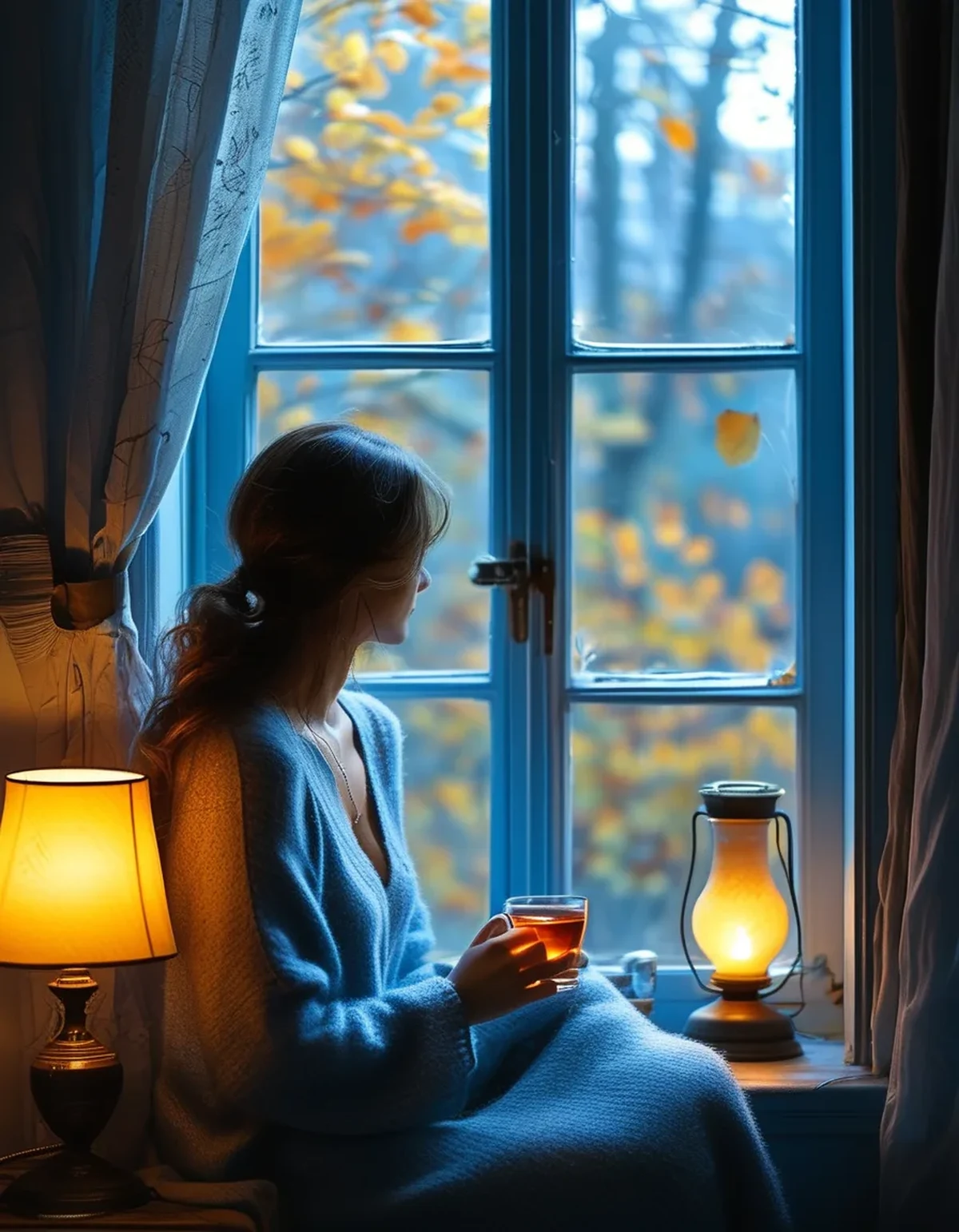
It arrives on a specific day, usually in October. You look up from what you are doing at about four, notice the light has gone blue, and feel something drop. The evening ahead suddenly seems long and heavy and you cannot say why, because nothing has actually happened.
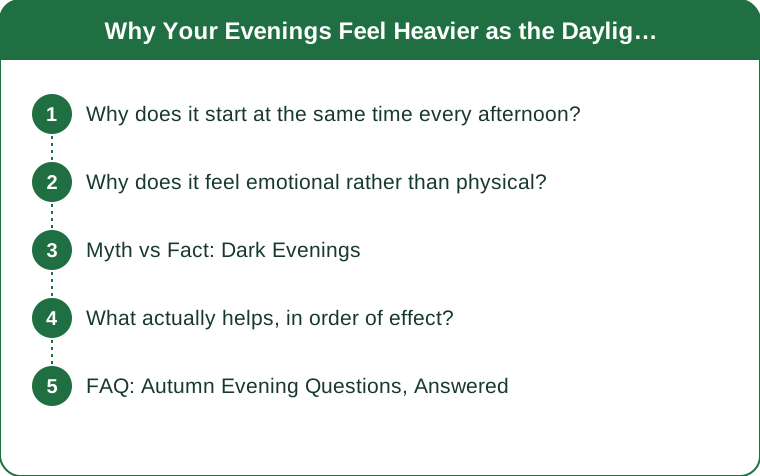
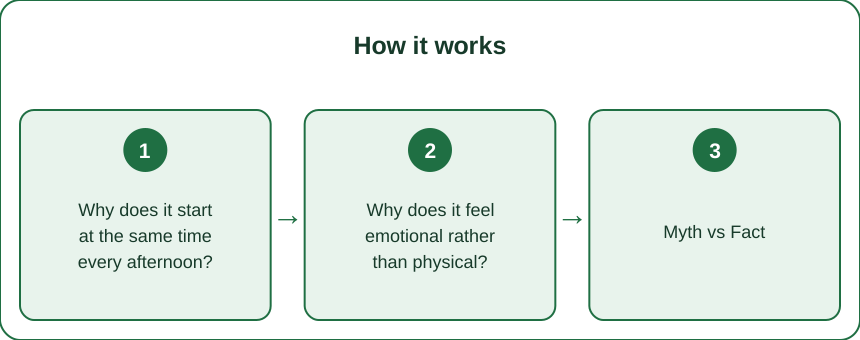
Why does it start at the same time every afternoon?
Because your body is running on a clock, and in autumn that clock stops matching the one on your phone.
Your circadian rhythm is set primarily by light hitting your eyes in the morning. That light signal tells the system where in the day it is, and everything downstream — alertness, cortisol, the timing of melatonin release in the evening — is anchored to it.
In summer, you get a strong light signal early. In late autumn, most people wake in darkness, travel in poor light, and are indoors under lighting that is perhaps five hundred lux where a cloudy day outdoors is ten thousand. The signal is weak, so the clock drifts later.
The result is a mismatch. Your body’s evening — its wind-down, its drop in alertness — starts arriving at four in the afternoon, while your actual evening of cooking, children, admin and conversation is still ahead of you. The heaviness is your system trying to close for the day several hours before you are allowed to.
It starts at the same time every day because clocks are precise. That is genuinely all it is.
Why does it feel emotional rather than physical?
Because low arousal reads as meaning.
When alertness drops, thinking gets slower and more effortful, and the brain does what it always does with an ambiguous internal state: it finds a reason. At four in the afternoon in July, a dip in energy gets attributed to a big lunch. The same dip at four in the afternoon in November, in blue light, with the day visibly ending, gets attributed to your life.
This is why the thoughts have a particular flavour. They are rarely new problems. They are the existing ones — the job, the relationship, the thing you have not dealt with — presenting themselves as urgent and unsolvable, which is exactly how problems look when you are examining them with less cognitive resource than usual.
The practical consequence is a rule worth keeping. Do not make decisions, have difficult conversations, or evaluate your life between four and seven in the afternoon in the dark months. Not because the feelings are fake, but because the assessment is being made with the instrument reading low. The same question at ten the next morning genuinely does look different, and that difference is information about the instrument, not about the question.
Myth vs Fact: Dark Evenings
Myth: You need more sleep in winter. Fact: Sleep need barely changes. What changes is timing — most people’s clocks drift later while their alarm stays fixed, so they end up sleep-restricted rather than needing more sleep. Fixing the timing helps more than an extra hour in bed at the weekend, which usually pushes the drift further.
Myth: The fix is to push through and stay busy in the evening. Fact: Loading the evening with activity fights the physiology rather than working with it. People who do best in winter generally front-load the day — harder tasks in the morning, lighter and more social things in the evening — rather than maintaining a flat schedule and using willpower to cover the dip.
Myth: A bright house helps. Fact: Bright overhead lighting at 9pm delays your clock further, which makes tomorrow’s dip worse. What helps is bright light in the morning and dimmer, lower, warmer light in the evening. The house should get progressively dimmer as the evening goes on, which is the opposite of what most homes do.
Myth: If it is not full seasonal depression, it does not count. Fact: The sub-clinical version — heavier evenings, less motivation, more carbohydrate craving, wanting to go to bed at eight — is far more common than the diagnosed condition and responds to the same first-line measures. You do not need a diagnosis to use light in the morning.
What actually helps, in order of effect?
1. Morning light, within an hour of waking. This is the one with the strongest evidence and the least effort. Ten to twenty minutes outdoors, even under heavy cloud. Not through a window — glass cuts the relevant intensity substantially. Walk to get a coffee, stand outside with your tea, take a phone call on the doorstep. If you genuinely cannot get outside before work, a light box of 10,000 lux at arm’s length for twenty to thirty minutes while you eat breakfast does a similar job.
2. A fixed wake time. More important than a fixed bedtime, because the wake time is when the light signal lands. Holding it within an hour across the week, including weekends, stops the drift re-establishing itself every Sunday.
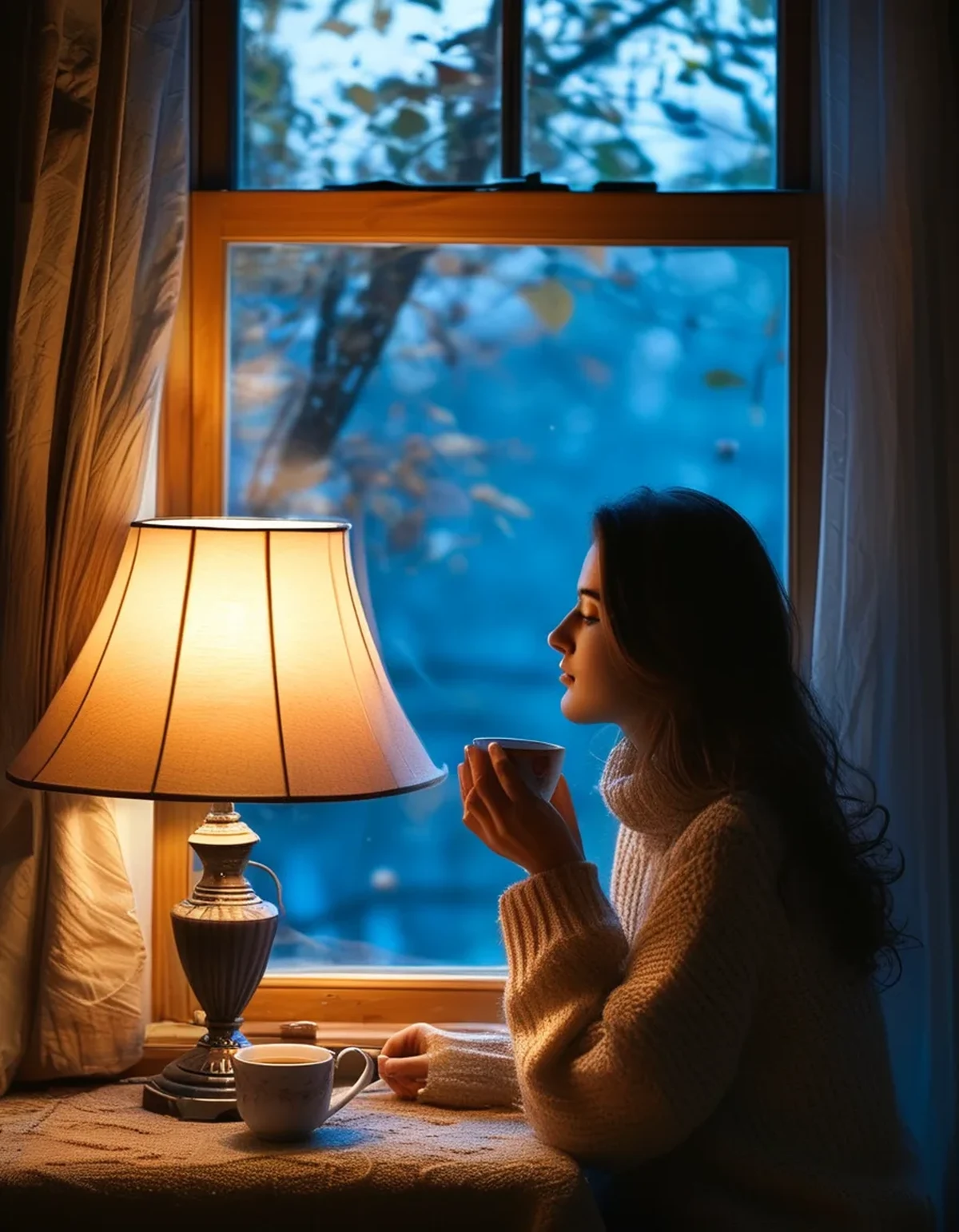
3. Dim the evening deliberately. Lamps rather than overheads from about two hours before bed. Warm bulbs. This is not about screens specifically — a bright ceiling light is a far stronger signal than a phone held at reading distance.
4. Move the dip instead of fighting it. If four to six is reliably heavy, put something undemanding and slightly social there on purpose: a walk, cooking with music on, a phone call. Trying to do focused work in that window and failing adds a sense of inadequacy to a physiological low.
5. Eat something at the dip. Blood glucose falling at the same time as alertness makes it considerably worse, and the late-afternoon slump is when most people have gone longest without eating.
FAQ: Autumn Evening Questions, Answered
How long does it take for morning light to make a difference?
Most people notice something within three to five days of consistent morning exposure, and the full effect builds over two to three weeks. The key word is consistent — three good mornings followed by four dark ones does very little.
Do light boxes actually work or are they a gimmick?
Bright light therapy has genuinely good evidence for seasonal mood changes, and it is a standard first-line treatment. The important details are intensity (10,000 lux), timing (morning, shortly after waking), duration (20 to 30 minutes) and distance — a small dim lamp on a desk does not do the same thing.
When is this more than a seasonal dip?
When it lasts most of the day rather than arriving in the afternoon, when it persists for two weeks or more, when it affects your ability to work or care for people, or when there are thoughts of harming yourself. That is the point to speak to a GP rather than adjusting your lighting, and it is a very treatable thing to bring to them.
TL;DR:
- The four o’clock heaviness is a circadian timing mismatch, not a character flaw — your body’s evening arrives before your actual evening does.
- Low alertness makes existing problems look unsolvable, so postpone evaluations and difficult conversations to the morning.
- Morning light within an hour of waking is the highest-leverage fix. Outdoors beats windows, and consistency beats duration.
- Dim the evening rather than brightening it, hold a fixed wake time, and schedule something easy into the dip instead of fighting it.
The heaviness is real and it is also mechanical, which is the useful part. It arrives at the same time every day because it is being produced by a clock, and clocks can be reset. Ten minutes outside tomorrow morning is a better answer than anything you can talk yourself into at five this afternoon.
Keep Reading
This article is for general informational and styling purposes only. Fit, sizing, and product availability may vary.