Why Deep Breathing Makes You Dizzy and What to Do Instead

Quick Answer: Dizziness during deep breathing usually means you are over-breathing - taking in more air than your body needs, which lowers carbon dioxide levels and constricts blood vessels in the brain. The fix is not deeper breaths, it is smaller, slower ones with a longer exhale. Try breathing normally through the nose with a slow six-second exhale, and stop the exercise if lightheadedness builds.
Everyone tells you to breathe. Nobody mentions that doing it enthusiastically can make you feel worse than you did before you started.

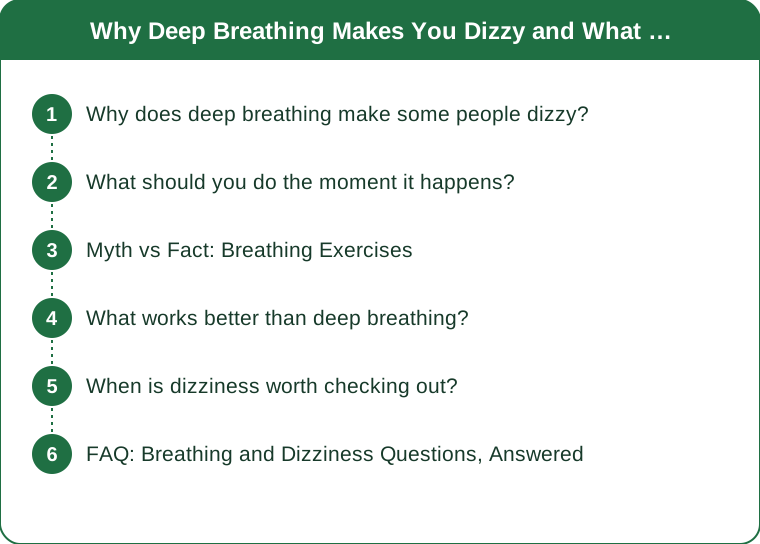
Why does deep breathing make some people dizzy?
Because deep usually gets interpreted as more, and more air is the problem. When you deliberately breathe big, you typically also breathe faster, and the combination moves more air than your metabolism is producing waste for.
That lowers carbon dioxide in your blood. Carbon dioxide is not just waste - it regulates blood pH and blood vessel tone. When it drops, blood vessels in the brain narrow, and cerebral blood flow falls.
Reduced cerebral blood flow is what dizziness feels like. So does the tingling in the fingers and around the mouth, the light-headedness, and sometimes the sense of unreality that people find frightening.
It is harmless and self-limiting, and it is also alarming - particularly for anxious people, who then read the symptoms as evidence that something is wrong, which raises anxiety, which drives more over-breathing.
Anxious breathing is already shallow and fast. Adding big effortful breaths on top of an already elevated rate is the specific combination most likely to tip someone into this.
And chest breathing makes it worse than belly breathing. Upper-chest breaths recruit accessory muscles, feel effortful, and encourage a faster rate - which is the opposite of what you want.
What should you do the moment it happens?
Stop the exercise. Do not push through. This is not a threshold to break through, and continuing simply extends the symptoms.
Let your breathing go completely normal for a minute. Do not try to control it at all. Your body restores carbon dioxide levels on its own within a minute or two of ordinary breathing.
Sit down if you are standing, both because it is more comfortable and because it removes the small risk of a faint.
Breathe through the nose only. Nasal breathing naturally limits how much air you can move, which is exactly the constraint that helps here.
Ignore the advice about breathing into a paper bag. It is outdated, it can be genuinely dangerous if the cause of the symptoms is not over-breathing, and it is not recommended.
And expect the tingling to fade last. Light-headedness usually clears first; tingling in the hands and around the mouth can linger a few minutes longer, which is normal and not a sign anything went wrong.
Myth vs Fact: Breathing Exercises
Myth: deeper breaths mean more oxygen and more calm. Fact: in ordinary conditions your blood is already close to fully saturated with oxygen. Extra breathing does not add meaningful oxygen - it removes carbon dioxide, which is what causes the symptoms.
Myth: if breathing exercises make you dizzy, you are doing them wrong. Fact: you are usually doing them too enthusiastically. The instruction take a deep breath is genuinely a poor instruction for anxious people, and clinicians increasingly teach small and slow instead.
Myth: the dizziness is dangerous. Fact: over-breathing dizziness is uncomfortable and self-limiting. It is worth taking seriously as a signal to change technique, not as a medical emergency.
Myth: you should hold your breath to fix it. Fact: a gentle pause after the exhale can help, but breath-holding as a rescue technique is unpleasant for anxious people and easy to overdo. Normal breathing works fine.
Myth: everyone should do the same protocol. Fact: box breathing suits some people and makes others feel constrained. Extended-exhale breathing suits most anxious people better, because it does not require holding anything.
Myth: the goal is a very slow rate. Fact: the goal is a comfortable, sustainable rhythm. Chasing a target number is a common way to end up straining and dizzy again.

What works better than deep breathing?
Extended exhale, ordinary inhale. Breathe in normally through the nose for about four seconds, then out slowly for six. You are not taking bigger breaths - you are lengthening the out-breath, which is the part associated with the calming branch of the nervous system.
Small, quiet, nose-only breathing. Aim for breaths so quiet you could not be heard from across the room. For over-breathers, less air is the intervention.
The physiological sigh. Two inhales through the nose, the second short and topping up, then a long slow exhale through the mouth. One to three repetitions. It is quick, well-tolerated, and rarely causes dizziness because the emphasis is on the exhale.
Breathing with a movement anchor. Walking and letting the breath match your steps - in for three steps, out for five - stops the effortful controlling that causes over-breathing in the first place.
Grounding instead of breathing. If breathwork consistently makes you feel worse, use a five-senses scan, cold water on the wrists, or firm pressure through the feet. Breathing is one tool among many, not a requirement.
And keep sessions short at first. Two minutes, twice a day, beats ten minutes once. Tolerance builds, and short sessions rarely produce symptoms.
When is dizziness worth checking out?
If it happens without any breathing exercise involved. Spontaneous dizziness is a different question, and it deserves a proper look.
If it comes with chest pain, an irregular heartbeat, or shortness of breath at rest. Do not attribute those to breathing technique.
If you actually faint. Over-breathing rarely causes true loss of consciousness, so a faint warrants medical attention.
If it persists for a long time after normal breathing resumes. Recovery should take a minute or two, not an hour.
If you have asthma, a heart condition, are pregnant, or have low blood pressure, it is worth asking a clinician which breathing practices are appropriate for you before starting a new one.
This is general information, not medical advice. Recurrent dizziness, fainting, or breathlessness should be assessed by a doctor rather than managed with breathing techniques alone.
FAQ: Breathing and Dizziness Questions, Answered
Why do I get lightheaded during breathing exercises?
Almost always because you are moving more air than your body needs, which lowers blood carbon dioxide and narrows blood vessels in the brain. It is uncomfortable rather than dangerous, and it is a signal to breathe smaller and slower rather than deeper.
Is it normal to feel tingly hands during deep breathing?
Yes. Tingling in the fingers and around the mouth is a classic over-breathing symptom and comes from the same drop in carbon dioxide. It fades within a few minutes of returning to normal breathing, and typically clears after the dizziness does.
What breathing exercise is best if deep breathing makes me dizzy?
Extended-exhale breathing: an ordinary nose inhale for about four seconds, then a slow exhale for about six, with no forcing and no big breaths. The physiological sigh is another good option. Keep sessions to two or three minutes at first.
Should I use a paper bag if I hyperventilate?
No. That advice is outdated and can be dangerous if the symptoms have another cause. Simply stopping the exercise, sitting down, and letting your breathing return to normal for a minute or two is both safer and effective.
TL;DR:
- Dizziness during breathwork is over-breathing: too much air lowers carbon dioxide, which narrows brain blood vessels.
- Tingling in the fingers and around the mouth comes from the same mechanism and is harmless but unpleasant.
- Stop the exercise, sit down, and breathe completely normally for a minute - recovery takes a minute or two.
- Skip the paper bag; it is outdated advice and can be dangerous.
- Use extended exhales (in for four, out for six), small quiet nose breathing, or the physiological sigh instead of deep breaths.
- Keep sessions to two or three minutes at first, and use grounding techniques if breathwork consistently backfires.
The instruction take a deep breath is the problem. Take a smaller, slower one.
Keep Reading
This article is for general informational and styling purposes only. Fit, sizing, and product availability may vary.