Why Your Calm Disappears the Moment You Open Your Phone - and the Ten Minutes That Protect It

Quick Answer: A meditation session produces a temporary shift in attention and arousal, and that shift is fragile for the first several minutes afterwards. Opening a phone immediately floods the same attentional system with novelty, social evaluation, and unfinished tasks - which is close to the fastest possible way to undo it. Protecting a 10-minute buffer after practice preserves substantially more of the benefit than adding 10 minutes to the practice itself.
The part nobody mentions is that the transition out of meditation matters as much as the meditation.

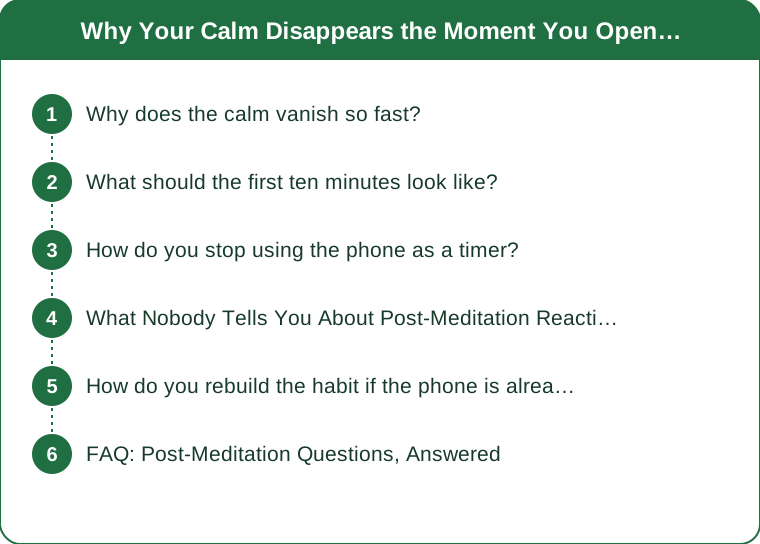
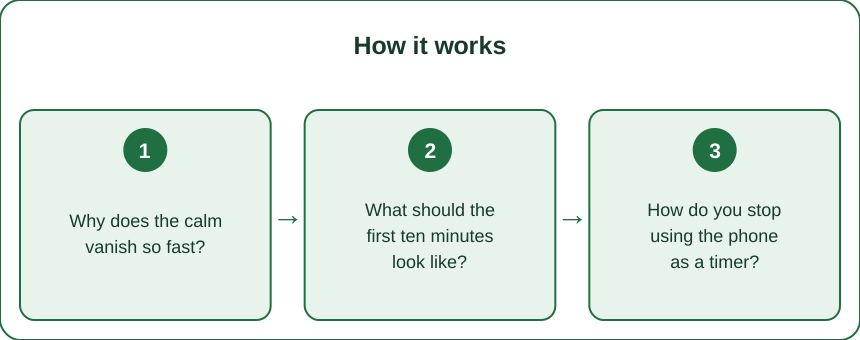
Why does the calm vanish so fast?
Because you have just spent ten minutes narrowing your attention and then handed it the widest possible input.
What meditation does, mechanically. Most practices train you to hold attention on one thing and return to it when it wanders. The effect afterwards is a lowered arousal state and a slightly slower, less reactive attentional style. It is a state, not a trait - the trait changes come from months of practice, but the immediate post-session effect is a temporary state that is easy to disrupt.
What a phone does to that state:
- Novelty on every scroll, which is exactly the stimulus attention is built to chase
- Social evaluation - messages, replies, and their absence, all of which carry emotional weight
- Unfinished tasks. An inbox is a list of open loops, and open loops occupy working memory whether or not you act on them
- Time compression. Notifications carry implied urgency, and urgency is the opposite of the state you just built
Why the timing matters so much. The first few minutes after any state change are when the state is most sensitive. This is intuitive elsewhere - nobody sprints immediately after a massage, or checks work email in the first minute of a holiday - and it is oddly ignored with meditation, largely because the phone is usually the timer.
The timer problem deserves its own mention. If your phone is your meditation timer, the very first object you touch afterwards is the one thing most likely to undo the session, and it arrives with a lock screen full of notifications. This single detail undermines an enormous number of otherwise good practices.
What should the first ten minutes look like?
Slow, physical, and low-input. The specific activity matters less than what it excludes.
What works well:
- Sit for another two minutes with your eyes open. Not meditating - just sitting, looking at the room, letting the state come with you into ordinary seeing. This is the single highest-value addition and it costs two minutes
- Make tea or coffee slowly. A physical, familiar, low-demand task holds attention gently without flooding it
- Step outside for a few minutes. Natural light and open visual space suit the post-practice state particularly well
- Stretch or move gently. Movement transitions the body without asking anything of your attention
- Write three lines. A short journal entry consolidates the session and keeps the input internal
- Do one slow household task - watering plants, washing a cup, tidying one surface
What undoes it:
- Phone, obviously, and email in particular
- News of any kind
- Any conversation that starts with a problem to solve
- Podcasts and audiobooks, surprisingly - they are input-dense even when the content is calm
The ten-minute number is not magic. Five minutes is meaningfully better than zero, and most people report that the state persists noticeably longer when the transition is protected at all. The comparison worth making: ten minutes of protected transition after a ten-minute session generally leaves you calmer at midday than a twenty-minute session followed immediately by the phone.
A structural suggestion: put the practice where a buffer already exists. Right after waking, before the household is up, or immediately before a shower. Attaching it to a slot that already has ten quiet minutes after it removes the need for willpower entirely.
How do you stop using the phone as a timer?
Move the timing off the device, or make the device useless for anything else.
In order of effectiveness:
1. A separate timer. A kitchen timer, a cheap digital timer, or a watch. Removes the problem entirely for a few pounds. The most reliable answer and the one people skip because it feels excessive.
2. An analogue clock. Sit facing a clock and end when the hand reaches a point. No alarm at all. Slightly less precise and completely sufficient.
3. Airplane mode plus a locked screen. If you must use the phone, turn on airplane mode before you start rather than after. The notifications that would have arrived are then not waiting on the lock screen when you open your eyes. The order matters - doing this after the session is too late.
4. Face down, across the room. Physical distance adds the friction that makes the choice conscious rather than automatic.
5. A smart speaker or watch timer, if you have one. Voice-set timers avoid the screen entirely.
On meditation apps specifically. They are genuinely useful for structure and for beginners, and they are also a phone, in your hand, at the exact moment you should not be holding one. If you use one, the workable compromise is to start the session, put the phone face down and out of reach, and do not pick it back up when it ends - let the app log whatever it logs later.
A small detail that helps more than it should: turn off the streak counter and the session summary if the app has one. A summary screen at the end of a session is an immediate pull back into evaluation, comparison, and numbers - which is a strange note to end on.

What Nobody Tells You About Post-Meditation Reactivity
There is a phase after practice where you are more sensitive, not less, and it catches people out.
The heightened-sensitivity effect. After a session, many people notice sounds more sharply, feel emotions more distinctly, and find abrupt input genuinely jarring. This is usually described as a good thing - and it is - but it also means the post-session window is when an irritating email lands hardest. Calm and sensitivity arrive together. Walking straight into a work inbox from that state is not a neutral act.
Which is why people conclude meditation does not work for them. The sequence is: meditate, open phone, encounter something stressful, feel it acutely, and conclude the practice did nothing. The practice worked; the transition was the problem.
The second thing nobody says: the benefit is not supposed to be permanent within a day. The state fades. That is what states do. The value accumulates across weeks, not within an afternoon, and expecting a single session to carry you through a difficult day sets up a false test.
The third: mornings and evenings are different. A morning session sets a starting point for the day, and protecting the transition matters most there because the day is about to load in. An evening session is a downshift, and the risk is different - the phone before sleep undoes both the practice and the sleep.
And the fourth, which is genuinely counterintuitive: shortening the practice to protect the transition is usually the right trade. Ten minutes of practice with ten minutes of buffer beats twenty minutes of practice with none, particularly on busy mornings. Most people do the opposite - they cut the buffer to protect the session, and lose most of the benefit of both.
How do you rebuild the habit if the phone is already the default?
In small structural steps rather than by intention, because intention loses to habit at 7am.
Week one: change the object. Buy or find a non-phone timer. Do nothing else. This alone removes the strongest trigger.
Week two: add two minutes of open-eyed sitting at the end of each session. Do not extend the meditation itself. Just sit, eyes open, for two minutes before standing.
Week three: pick one transition activity and use it consistently - the same tea, the same short walk, the same three journal lines. Consistency turns it into part of the practice rather than a decision to make afterwards.
Week four: move the phone physically. Leave it in another room during the session and for the transition. If work makes that impossible, airplane mode before starting is the workable version.
What to expect. Most people notice within about two weeks that the settled feeling lasts into mid-morning rather than evaporating at the door. It is not subtle, and it is a much larger effect than most session-length changes produce.
If the phone check is compulsive rather than habitual - if you feel genuine anxiety at not checking, or you check within seconds without deciding to - that is worth attention in its own right. Simple friction tricks help; so does noticing what the checking is doing for you. Persistent, distressing compulsion is a reasonable thing to raise with a doctor or therapist rather than solve with a kitchen timer.
One last practical note. The same principle applies to every other calm-generating activity you already protect badly: after a bath, after a walk, after a yoga class, after a good conversation. The transition out is when the benefit is either kept or spent. Meditation is simply the one where the loss is most measurable, because you were paying attention right before it happened.
This is general wellbeing information, not medical advice. Persistent anxiety that does not respond to self-directed practice is worth discussing with a professional.
FAQ: Post-Meditation Questions, Answered
How long should I wait before checking my phone?
Ten minutes is a good target and five is meaningfully better than zero. The specific length matters less than having any buffer at all.
Is it bad to use a meditation app?
No - they are useful, particularly early on. The problem is the phone being in your hand at the end. Start the session, put it face down out of reach, and do not pick it up when the bell sounds.
Why do I feel more irritable after meditating sometimes?
Sensitivity often increases along with calm. Encountering something stressful in that window lands harder. It is a sign the practice did something, not that it failed.
Does this apply to evening meditation too?
Yes, and more so - phone use after an evening session undoes both the calm and the sleep quality you were probably meditating for.
TL;DR:
- The post-session state is fragile for the first several minutes, and a phone is the fastest way to undo it
- Novelty, social evaluation, and open loops all hit the same attentional system you just settled
- Ten protected minutes after a ten-minute session beats a twenty-minute session followed by the inbox
- Get the timer off your phone - this single change removes the strongest trigger
- Sensitivity rises with calm, so a stressful message right afterwards lands harder than usual
Protect the exit, not just the practice. It is the cheapest improvement available to anyone already meditating.
Keep Reading
This article is for general informational and styling purposes only. Fit, sizing, and product availability may vary.