Sound Bath Meditation for Beginners: What It Actually Does and How to Start

Quick Answer: A sound bath uses sustained tones from singing bowls, gongs, or chimes to help shift your brainwaves toward a slower, more relaxed state — it works similarly to guided meditation but gives your mind an external anchor to follow instead of asking you to sit with total silence.
If silent meditation has never quite worked for you, a sound bath solves a specific problem: it gives your attention somewhere to go, which for a lot of restless minds is the missing piece.
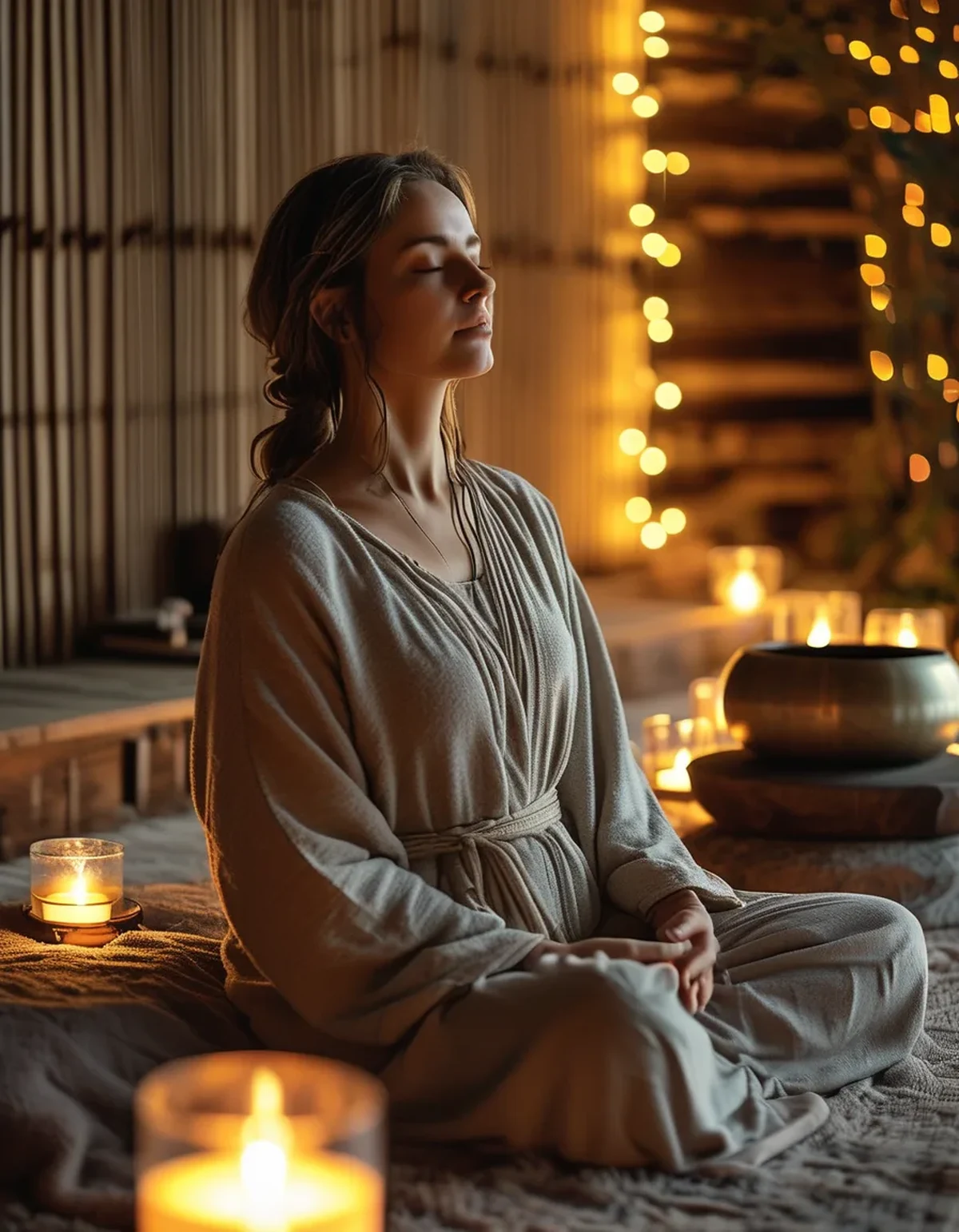
What actually happens during a sound bath?
A practitioner plays a sequence of instruments — typically crystal or metal singing bowls, gongs, chimes, and sometimes a tuning fork — while participants lie down or sit comfortably, usually with eyes closed. There’s no chanting or instruction to follow along with; the sound itself is the entire practice.
Sessions typically run 30-60 minutes, and most people are encouraged to simply let their attention rest on the sound rather than actively trying to relax, which paradoxically tends to work better than forcing calm.
Why does listening to bowls and gongs actually help you relax?
The sustained, slowly-shifting tones give your brain a simple, repetitive pattern to track — similar to how a metronome or ocean waves can be soothing, sound baths provide an external rhythm that’s easier to follow than the instruction to “clear your mind.”
Some research on sound-based relaxation suggests it can measurably lower heart rate and shift brainwave activity toward slower patterns associated with rest, though the exact mechanism is still being studied — what’s consistent across most people’s reports is that having an external sound to follow feels less demanding than silent meditation.

Myth vs Fact: Sound Baths
Myth: You need to understand or believe in sound healing for it to work. Fact: the relaxation response is largely physiological — a slower heart rate and calmer nervous system respond to sustained, low-frequency sound regardless of what you believe about it.
Myth: Falling asleep during a sound bath means you’re doing it wrong. Fact: many practitioners consider light sleep or a drowsy, half-aware state a completely normal and even desirable response, not a failure to participate properly.
Myth: You need special training to try this at home. Fact: recorded sound bath sessions (many free ones exist) work reasonably well for beginners easing into the format before attending an in-person session.
How is this different from a regular guided meditation?
Guided meditation typically involves a voice giving instructions — breathe here, notice this, return your attention there — which some people find helpful and others find distracting or overly directive.
A sound bath removes the verbal instruction entirely; your only job is to listen. For people who find guided meditation apps’ constant talking mentally tiring rather than calming, sound baths offer a genuinely different entry point into the same basic relaxation goal.
FAQ: Sound Bath Meditation Questions, Answered
Do I need to do anything during a sound bath, or just listen?
Just listen and lie or sit comfortably — there’s no technique to get right, which is part of what makes it accessible for people who find active meditation instructions stressful.
Can I do a sound bath at home without special equipment?
Yes — recorded sessions on meditation apps or video platforms provide a reasonable approximation, though the physical resonance of in-person bowls does add something recordings can’t fully replicate.
How often should I try a sound bath to notice benefits?
Even a single session often produces a noticeable relaxation effect immediately afterward; for lasting stress-reduction benefits, weekly or biweekly sessions (in-person or recorded) tend to work better than one-off attempts.
TL;DR:
- Sound baths use sustained tones to give your attention something simple to follow, unlike silent meditation
- The relaxation response is largely physiological, not dependent on belief
- Falling asleep or drifting into a drowsy state during a session is normal, not a failure
- Recorded sessions work fine as a low-pressure way to try the format before going in person
If silence has never worked for your meditation practice, a sound bath might be the format that finally clicks.
Keep Reading
This article is for general informational and styling purposes only. Fit, sizing, and product availability may vary.