Why Mornings Feel Heavy After the Clocks Shift

Quick Answer: Heavy mornings after a clock change happen because your body clock is still on the old schedule. Get bright light within the first hour after waking, keep your bedtime steady, and move your routine in small steps over several days. Most people settle within one to two weeks.
The clocks shift, and suddenly your morning feels like it is running through mud. You hit snooze, your mind feels foggy, and you wonder why one hour makes such a big difference. Your internal clock needs time to catch up, and the early days are the hardest part.

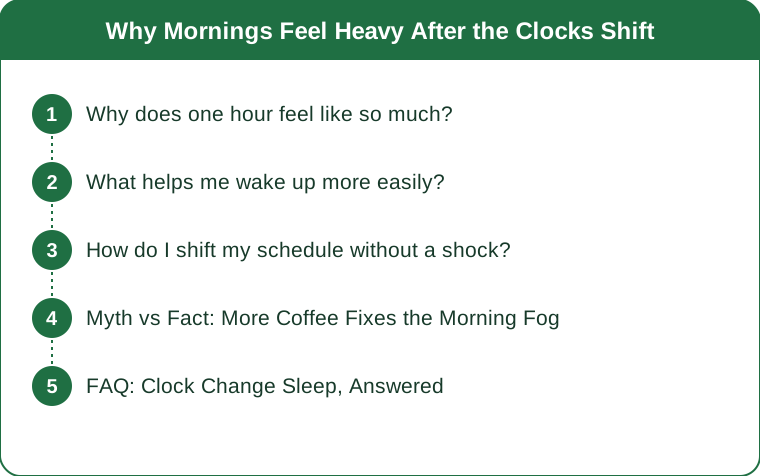
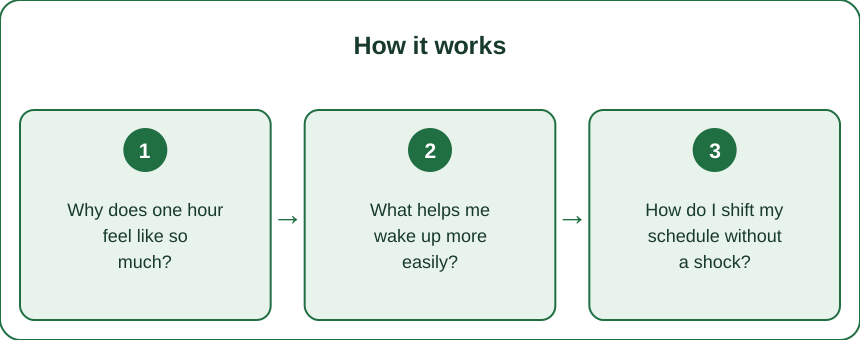
Why does one hour feel like so much?
Your body runs on an internal clock tied closely to light and routine. When the clock changes, your light exposure and meal times shift by an hour, but your internal rhythm lags behind. That gap shows up most in the morning, when you need to be alert and your body is still expecting an earlier wake time.
Some people feel it more than others, especially if they already sleep lightly or have a busy schedule.
What helps me wake up more easily?
Start with light. Open the curtains as soon as you wake and spend 10 to 15 minutes near a window or outside if you can. Light is one of the strongest signals your body uses to set its clock.
Then keep your wake time steady, even on weekends. A consistent time helps your body settle faster than sleeping in to catch up.

How do I shift my schedule without a shock?
Move your bedtime and wake time 15 minutes earlier each day for three to four days, if you can. Eat breakfast at a similar time each morning, and keep caffeine to the first half of the day.
If you cannot shift gradually, focus on light and consistency instead. Your body will adjust, usually within one to two weeks.
Myth vs Fact: More Coffee Fixes the Morning Fog
Myth: A bigger coffee is the best answer to a heavy morning after the clocks change.
Fact: Caffeine can help in the short term, but a late cup can make it harder to fall asleep and keep the cycle going. Light, routine, and an earlier wind-down do more for the long run.
FAQ: Clock Change Sleep, Answered
How long does the adjustment usually take?
Most people feel settled within one to two weeks. Keep your routine steady during that time.
Should I nap to feel better?
A short nap of 20 minutes early in the afternoon can help. Long naps late in the day can make it harder to sleep at night.
When should I talk to a doctor?
If you still feel exhausted after several weeks, or you have trouble sleeping that affects your daily life, ask your doctor. This is general information, not medical advice.
TL;DR:
- Heavy mornings after a clock change come from a body clock that has not caught up yet.
- Get bright light soon after waking, and keep your wake time steady.
- Shift your schedule gradually, about 15 minutes a day, when you can.
- Limit caffeine to the first half of the day, and expect most people to settle within two weeks.
Keep Reading
This article is for general informational and styling purposes only. Fit, sizing, and product availability may vary.