Why Journaling Before Bed Sometimes Makes You More Anxious

Quick Answer: Open-ended, reflective journaling right before bed can surface unresolved worries at exactly the moment your mind is supposed to be winding down — structured formats (a gratitude list, or a specific “tomorrow’s plan” brain dump) tend to avoid this effect better than free-form reflective writing does.
Journaling gets recommended broadly as a calming bedtime habit, but open-ended reflection can just as easily surface anxious thoughts as resolve them, especially for people already prone to rumination.

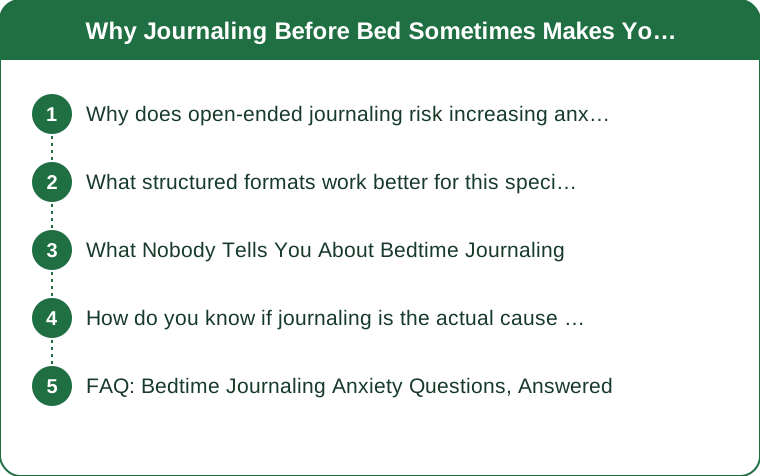
Why does open-ended journaling risk increasing anxiety at night specifically?
Free-form reflective writing doesn’t have a built-in stopping point, and mid-evening, tired, lower-guard state can make it easier to spiral into worry-focused writing rather than resolution-focused writing. Without structure, journaling can function more like extended rumination than calming reflection, particularly for people already prone to anxious thought loops.
What structured formats work better for this specific time of day?
A gratitude list (3 specific things, no elaboration) has a natural, quick endpoint and directs attention toward positive, settled content rather than open problem-processing. A “brain dump” for tomorrow — simply listing tasks or worries to address the next day, without trying to solve them tonight — externalizes the worry without requiring resolution before sleep.

What Nobody Tells You About Bedtime Journaling
The time of day matters as much as the journaling format itself. The exact same open-ended reflective journaling that increases anxiety at bedtime can be genuinely calming and useful earlier in the day, when there’s more mental bandwidth and time to actually sit with and process what comes up, rather than needing to sleep shortly after.
How do you know if journaling is the actual cause of your bedtime anxiety versus something else?
If anxious thoughts specifically intensify during or right after journaling, compared to your baseline anxiety level before starting to write, that’s a reasonably clear signal the format or timing is the issue rather than an unrelated cause.
FAQ: Bedtime Journaling Anxiety Questions, Answered
Should I stop journaling altogether if it’s causing bedtime anxiety?
Not necessarily — switching the timing to earlier in the day, or switching to a structured format at night, often resolves the issue without giving up the habit entirely.
Is a gratitude list actually effective, or is it too simple to matter?
Research on gratitude practices generally supports it as a genuinely effective calming technique, not just a placeholder activity — its simplicity is part of why it works well at bedtime specifically.
When should bedtime anxiety, journaling-related or not, prompt seeing a professional?
If anxiety is regularly disrupting sleep onset or quality, a therapist can help identify patterns and provide more targeted strategies than self-adjusting journaling habits alone. This is general information, not medical advice.
TL;DR:
- Open-ended reflective journaling can surface worry right when you’re trying to wind down
- Structured formats like gratitude lists or tomorrow’s brain dump avoid the open-ended spiral
- The same journaling style can work fine earlier in the day but backfire specifically at bedtime
- Switching timing or format usually resolves the issue without abandoning journaling entirely. This is general information, not medical advice.
Keep Reading
This article is for general informational and styling purposes only. Fit, sizing, and product availability may vary.