Why Your Mind Won't Settle When the Schedule Restarts

Quick Answer: The restlessness that shows up when a schedule restarts isn’t usually about any single stressor - it’s cognitive load from a large number of small unresolved decisions arriving at once. The fastest relief is externalising them: write every open loop down, which reduces the mental effort of holding them, then use a four-minute physiological reset to lower arousal before you try to think clearly. Ordering the list comes third, not first.
Nothing terrible is happening. The list isn’t even that long when you write it out. And still, sitting down at 9pm, your mind is doing laps.
This is a specific and predictable pattern, it peaks around schedule transitions, and there’s a reliable way through it that doesn’t require becoming a different person.
This is general information, not medical advice. Anxiety that persists, interferes with daily functioning, or comes with physical symptoms deserves a conversation with a doctor.

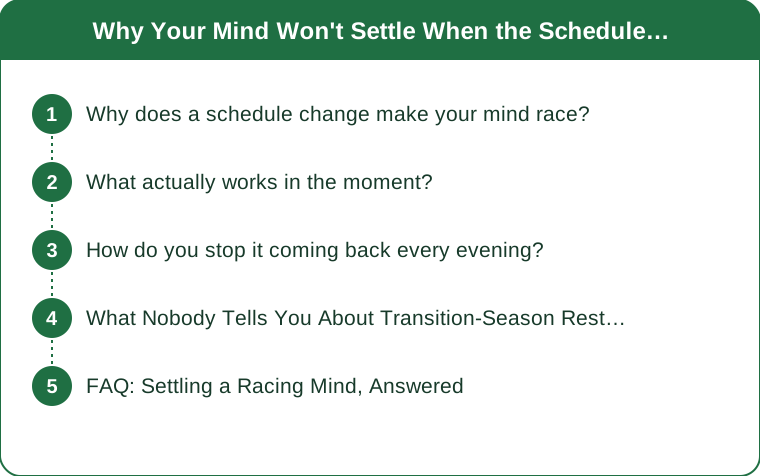
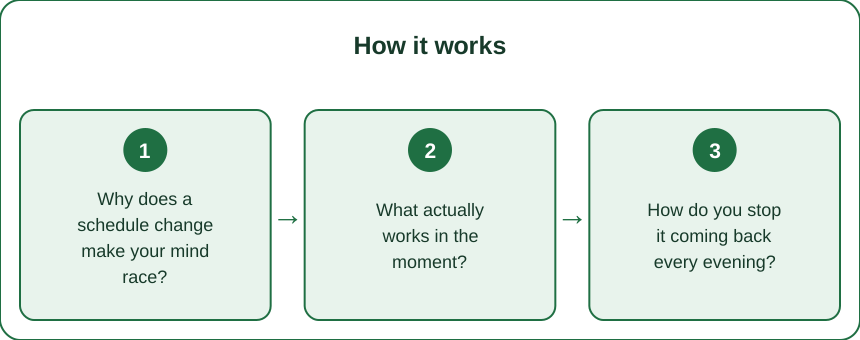
Why does a schedule change make your mind race?
It’s a load problem, not a worry problem, and that distinction changes the fix.
Working memory holds a small number of items at once. When a routine is settled, most of your day runs on automatic patterns that consume almost no attention. A schedule change converts automatic behaviour back into deliberate decisions - what time to leave, which route, who’s picking up what, when the new thing happens - and each one now occupies space that used to be free.
Unfinished tasks occupy attention disproportionately. There’s a well-documented tendency for incomplete tasks to stay mentally active in a way completed ones don’t. A transition period generates dozens of half-finished loops simultaneously, and each one keeps quietly pinging.
Your body reads the load as threat. Sustained cognitive demand triggers the same arousal system as an actual threat - slightly raised heart rate, shallow breathing, muscle tension. Then the physical arousal feeds back as a feeling of urgency, which the mind interprets as evidence something is genuinely wrong. That loop is what keeps you awake.
Why evening is the worst time: it’s the first moment all day without external input, so the backlog surfaces. The racing thoughts weren’t caused by lying down - lying down just removed the distraction that was suppressing them.
The important reframe: this isn’t a sign you’re not coping. A period of higher mental noise during a transition is the expected response to a genuine increase in load, and it typically settles within two to three weeks as new patterns become automatic again.
What actually works in the moment?
Physiology first, thinking second. Trying to think your way calm while your body is aroused doesn’t work well.
The four-minute reset, in order:
1. Two physiological sighs, 30 seconds. Inhale through the nose, then take a second shorter inhale on top of it, then a long slow exhale through the mouth. Repeat twice. This pattern is one of the fastest voluntary methods for lowering arousal, and it works within a few breaths.
2. Extended exhale breathing, 90 seconds. In for 4, out for 6-8. The specific numbers matter less than the exhale being longer than the inhale - that’s what shifts the balance toward the calming branch of the nervous system.
3. Name five things you can see, 60 seconds. Out loud if you’re alone. This interrupts the internal loop by occupying the same attentional resources it was using.
4. Write the list, 60-120 seconds. Every open item, no ordering, no judgement. The relief comes from externalising, not from solving - the mind stops rehearsing items once they’re recorded somewhere it trusts.
Why this order: grounding and breathing lower the arousal that makes the list feel overwhelming. Writing the list while your heart rate is still up produces a list that reads like a catastrophe. The same list read four minutes later reads like a Tuesday.
What to skip in the moment: trying to meditate for twenty minutes while agitated, which usually amplifies the noise. Sitting still with a racing mind is an advanced skill, not a starting point - movement-based calming works far better when arousal is high.

How do you stop it coming back every evening?
Three structural changes, none of which require much time.
A five-minute daily download, at the same time. Not a planning session - a dump. Everything on your mind, onto paper, once a day, ideally late afternoon rather than bedtime. The consistency is what teaches your mind it doesn’t need to rehearse things at 11pm, because there’s a reliable slot where they get captured.
A hard transition marker between day and evening. Schedule changes blur the boundary between doing and resting. A specific physical cue - changing clothes, a short walk, closing a door - signals the switch far more effectively than deciding to relax. Ten minutes of walking outdoors does double duty here because of the light exposure.
Decide the recurring decisions once. Much of transition-period load is re-deciding the same small things daily. Fix them for the season: same breakfast, clothes chosen the night before, a set departure time, a standing answer for the recurring question. Every decision you retire frees genuine capacity.
On sleep specifically: the racing mind at bedtime often responds better to getting up than to lying there. If you’re awake more than about 20 minutes, get up, sit somewhere dim, do something undemanding, and go back when sleepy. Lying awake trains an association between the bed and being alert.
Expect it to take two to three weeks. The load falls as new routines become automatic. Knowing there’s an end point is itself calming - most of the distress in transition restlessness comes from assuming it’s the new normal.
What Nobody Tells You About Transition-Season Restlessness
Five things that reframe it usefully.
It peaks before the change, not during it. The anticipation phase carries the most unresolved uncertainty. Once the new schedule actually starts, most people feel better within days - which means the worst of it often arrives while you’re still telling yourself nothing has even happened yet.
Good changes produce it too. A new job you wanted, a course you chose, a schedule that’s objectively better - all still generate load, because load comes from novelty rather than from negativity. People often feel guilty about being unsettled by something positive, which adds a second layer for no reason.
The light is doing something as well. Daylight shortens noticeably from late August, and reduced morning light affects sleep timing and mood for a lot of people. Some of what feels like stress about the schedule is a body clock that’s drifting. Morning light exposure - 10 minutes outdoors early - addresses that specific component.
The list is almost always shorter than it feels. People consistently expect 30 items and write 11. The felt weight comes from the items circling repeatedly, not from their number, which is exactly why writing them down deflates it so effectively.
Restlessness and anxiety aren’t the same thing. Transition restlessness is load-driven, situational, and resolves as routines settle. Anxiety that’s persistent, disproportionate, or physically symptomatic is a different thing and worth raising with a doctor rather than managing with breathing exercises alone.
FAQ: Settling a Racing Mind, Answered
Why does meditation make it worse when I’m already agitated?
Sitting still with high arousal removes distraction without lowering the arousal, so the internal noise gets louder. Start with movement or breathwork to bring arousal down, then sit. Walking meditation is a much better entry point during a stressful stretch.
Is it better to write the list in the evening or the morning?
Late afternoon or early evening works best for most people - late enough to capture the day, early enough that you’re not doing it in bed. A morning list handles planning; an evening download handles the loops that keep you awake.
How long should this last after a schedule change?
Usually two to three weeks as new routines become automatic. Beyond about a month with no improvement, the issue is probably not transition load, and it’s worth looking at sleep, workload, or speaking to a doctor.
Does exercise help or make it worse?
Helps, with a timing caveat. Moderate activity reduces arousal over the following hours. Intense training close to bedtime raises it temporarily for some people - if evenings are the problem, move hard sessions earlier and keep evenings to walking or gentle mobility.
What if my mind races even when the list is empty?
That suggests the mechanism is arousal rather than load, and the physiological tools matter more than the organisational ones. Consistent extended-exhale breathing, morning light, and regular sleep timing address arousal directly - and if it persists, it’s a reasonable thing to bring to a doctor.
TL;DR:
- Schedule-change restlessness is cognitive load, not a character flaw - dozens of small decisions turned deliberate at once
- Lower arousal before you try to think: physiological sighs, extended exhales, then ground, then write
- The list feels far longer than it is; externalising it is what stops the mental rehearsal
- Build a daily five-minute download at a fixed time, well before bed
- Retire recurring decisions for the season - each one you fix frees real capacity
- It usually settles in two to three weeks, and it peaks before the change rather than during it
Your mind isn’t failing to cope. It’s holding too many open tabs, and the fix starts with writing them down.
Keep Reading
This article is for general informational and styling purposes only. Fit, sizing, and product availability may vary.