How to Build a Meditation Habit That Actually Sticks

Quick Answer: Meditation habits stick when you start absurdly small — 2-3 minutes — and anchor the session to something you already do daily, like finishing your morning coffee. Keep the same time and place, treat a wandering mind as the practice rather than failure, and aim for “most days” instead of a perfect streak.
Day one: twenty minutes, cushion, incense, genuine intent.
Day two: fifteen minutes, slightly restless.
Day three: skipped it, felt bad about skipping it, decided to restart Monday. Monday never happened.
If that sequence looks familiar, the problem was never your discipline. It was the size of the ask.

Why Do Meditation Habits Fail?
Three reasons, and none of them is “you’re bad at meditating.”
You started too big. Twenty or thirty minutes is a genuinely demanding commitment for a brand-new habit. It needs a block of time, a quiet room, and a fair amount of willpower — and on the first busy day, all three go missing at once.
You had no trigger. A habit with no cue depends on you remembering to want it. That works for about four days, which is roughly how long motivation lasts before it hands the job back to circumstance.
You measured it wrong. If a calm, empty mind is your success criterion, you’ll fail every session, because that isn’t what meditation is. Noticing that you’ve wandered and coming back is the repetition — like a rep in the gym. A session with fifty wanderings is fifty reps, not a failure.
Two minutes you actually do beats twenty you skip. That’s the whole reframe.
The 5-Step Framework That Works
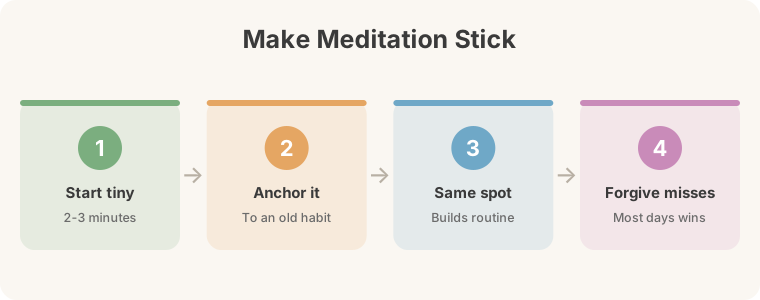
1. Start Tiny
2-3 minutes a day. It should feel almost embarrassingly easy — that’s the design, not a compromise. When the ask is small enough that “I don’t have time” is obviously untrue, you stop negotiating with yourself every morning.
Stay at 2-3 minutes for at least two weeks before you increase anything.
2. Anchor It to an Existing Habit
Attach it to something already automatic: right after you put your coffee cup down, or right after you get into bed. The existing habit becomes the reminder, so you’re not relying on memory or motivation.
Be specific. “After my morning coffee” works. “In the morning” does not.
3. Same Time, Same Place
Consistency of context builds habits noticeably faster. The same chair, the same corner, the same 8:05am. Your brain starts associating the setting with the state, and after a few weeks sitting down does part of the work for you.
4. Stop Chasing “Perfect”
Your mind will wander constantly. Every meditator’s mind wanders constantly — including the ones with 20 years of practice. Noticing and returning is the practice.
Also: you don’t need a cushion, silence, or a straight back. A chair is fine. Slouching a little is fine. Kids in the next room is fine.
5. Be Forgiving About Missed Days
A single missed day has almost no effect on whether a habit forms. What kills habits is the reasoning that follows it — “I broke the streak, so it’s ruined.” Aim for most days, not all days, and just resume tomorrow without ceremony.

5 Mistakes Everyone Makes Starting Meditation
- Expecting to feel calm immediately. Early sessions often feel more restless, because you’re noticing mental noise that was always there. This is a sign it’s working, not a sign it isn’t.
- Meditating in bed at night as your only session. You’ll fall asleep. Lovely, but it’s a nap, not a practice. Keep a daytime session if you want the habit to build.
- Switching apps every week. App-hopping is procrastination in a productive costume. Pick one, use it for a month, then judge.
- Setting a 20-minute timer “just to see.” You’ll finish it once, feel virtuous, and never repeat it. Cap yourself deliberately at 3 minutes even on days you feel ambitious — leaving wanting more is what builds a habit.
- Tracking streaks obsessively. A tracker is motivating right up until you break the chain, at which point it becomes a reason to quit. Track loosely, or track weekly totals instead of consecutive days.
What Small Tools Actually Help?
- A guided app — removes the “what do I actually do?” friction, which is the biggest barrier in week one
- One designated spot — a specific chair or corner you associate with the practice
- A loose tracker — checking off days works, as long as you don’t treat a gap as a failure
- Realistic expectations — benefits build gradually over weeks and months, not in a single dramatic session
- A timer with a gentle end sound — so you’re not peeking at the clock
Mini FAQ
How long until meditation feels natural?
Most people find sitting down stops requiring effort somewhere in the first four to eight weeks, though this varies a lot. Anchoring to an existing habit shortens it noticeably. The feeling of benefit often arrives before the feeling of ease.
Is it better to meditate in the morning or at night?
Morning tends to build habits more reliably, because the day hasn’t had a chance to derail it yet. Evening sessions are great for winding down, but they compete with tiredness and everything that ran late. If you can only do one, try morning first.
What if I fall asleep or can’t sit still?
Falling asleep usually means you’re sleep-deprived rather than bad at meditating — try sitting upright in a chair rather than lying down. If stillness feels impossible, start with a walking meditation or a body-scan instead; they give a restless mind something to do.
TL;DR:
- Start at 2-3 minutes and stay there for two weeks. Small is the strategy, not a compromise.
- Anchor it to a specific existing habit — “after my morning coffee,” not “in the morning.”
- Same time, same place. Context does a surprising amount of the work.
- A wandering mind is the practice, not a failure. Noticing and returning is the rep.
- Aim for most days, forgive the misses, and let it grow only after it’s effortless.
This article is for general wellness purposes only and isn’t medical advice. If you’re managing anxiety, trauma, or a mental health condition, talk to a professional about the right approach for you.
Keep Reading
This article is for general informational and styling purposes only. Fit, sizing, and product availability may vary.