The 4-7-8 Breathing Technique Doesn't Work for Everyone — Try This Instead
Quick Answer: If 4-7-8 breathing (inhale 4, hold 7, exhale 8) spikes your anxiety instead of calming it, try box breathing (4-4-4-4) or physiological sighing instead — both lower the breath-hold demand that trips up people with breath-related anxiety.
You’ve seen 4-7-8 breathing recommended everywhere — it’s the internet’s go-to “instant calm” trick. So when it makes your heart race instead of slowing it down, it’s easy to assume you’re doing it wrong. You’re probably not.
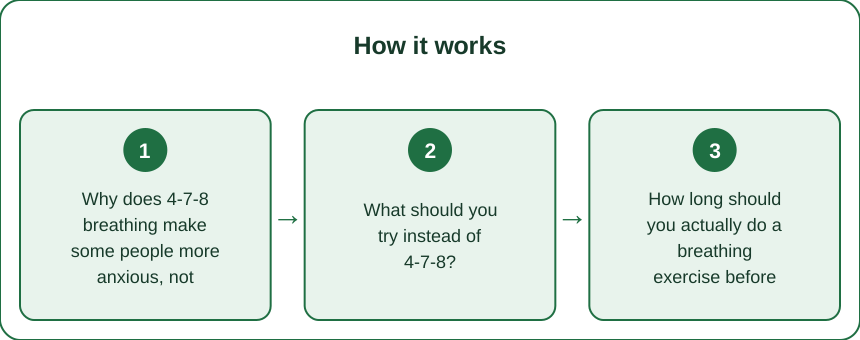
Why does 4-7-8 breathing make some people more anxious, not less?
The 7-second hold is the problem for a specific group of people. If you already have any tendency toward air hunger, panic-type anxiety, or just a sensitive CO2 response, holding your breath — especially after a short 4-count inhale — can trigger the exact fight-or-flight signal you’re trying to shut off.
This isn’t a personal failure or a sign you’re “bad at breathing.” Some nervous systems interpret breath-holding as a threat signal, full stop, regardless of intention.
What should you try instead of 4-7-8?
Box breathing (4-4-4-4) is the easiest swap: inhale 4, hold 4, exhale 4, hold 4. The hold is shorter and symmetrical, which tends to feel far less panicky than a 7-count hold.
Physiological sighing is another strong option: two inhales through the nose (one short top-up right after the first) followed by one long, slow exhale through the mouth. Stanford researchers found this pattern lowers arousal faster than several other techniques in same-day studies — and it has zero breath-holding involved.
How long should you actually do a breathing exercise before deciding it isn’t working?
Give any new technique 5-6 slow rounds, roughly 60-90 seconds, before judging it. The first 1-2 rounds of almost any breathing exercise can feel slightly odd simply because you’re paying conscious attention to something you normally do automatically — that’s not the same as the technique making you worse.
Myth vs Fact: Breathing Exercises for Anxiety
Myth: If a breathing technique is popular, it works the same way for everyone. Fact: Breath-hold tolerance varies a lot person to person, and techniques that rely on longer holds (like 4-7-8) are simply a worse fit for people with more reactive CO2 sensitivity — this has nothing to do with willpower.
Myth: You have to stick with one technique to get the benefit. Fact: Switching between box breathing, physiological sighing, and simple extended-exhale breathing (just breathing out longer than you breathe in, no holds at all) based on how you feel that day is completely fine and often more effective than forcing one method.
Myth: Feeling worse mid-exercise means you should push through it. Fact: If a technique reliably increases your heart rate or panic feeling, that’s real feedback — stop and switch, don’t grit your teeth through it.
FAQ: Breathing Technique Questions, Answered
Is it normal to feel lightheaded during breathing exercises?
Mild lightheadedness during the first round or two can happen, especially with longer exhales, but it should ease as you continue. If it persists or feels alarming, stop and breathe normally.
Can breathing exercises replace anxiety medication or therapy?
No — they’re a helpful in-the-moment tool for many people, but they’re not a substitute for professional treatment if you have an anxiety disorder. This is general information, not medical advice.
How often should you practice for it to actually help during real anxiety spikes?
Daily practice during calm moments, even just 2-3 minutes, builds the skill so it’s actually available to you during a real spike — trying a brand-new technique for the first time mid-panic rarely goes well.
TL;DR:
- 4-7-8’s 7-second hold backfires for people with reactive breath-hold anxiety
- Box breathing (4-4-4-4) and physiological sighing are gentler, hold-light alternatives
- Give any technique 5-6 rounds before judging it
- Feeling worse mid-exercise is valid feedback to switch, not push through
The “best” breathing technique is the one that actually calms your specific nervous system — not the one with the most views.
Keep Reading
This article is for general informational and styling purposes only. Fit, sizing, and product availability may vary.